How Do Fire Roller Shutters Work? Mechanisms, Sensors & Safety Features
How Do Fire Roller Shutters Work? Mechanisms, Sensors & Safety Features

Fire safety in industrial and commercial buildings relies on more than alarms and evacuation routes. In large, open environments, physical barriers play a critical role in slowing the spread of fire and protecting people, property, and critical infrastructure.
Fire roller shutter doors are designed to operate automatically during a fire, closing off sections of a building to help contain flames and smoke.
While they are often seen as security features, their primary purpose is fire compartmentation, a function made possible by a combination of mechanical design, sensors, and fail‑safe systems.
Understanding how these shutters work provides valuable insight into why correct specification, installation, and maintenance are essential for fire safety compliance.
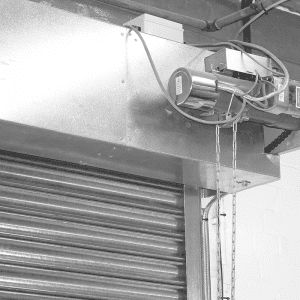
What Problem Do Fire Roller Shutters Solve?
In the event of a fire, uncontrolled airflow and open spaces allow flames and smoke to spread rapidly throughout a building.
This is particularly dangerous in industrial and commercial environments such as warehouses, factories, and car parks, where wide openings are often required for daily operations.
Fire rated roller shutters are used to create temporary fire‑resistant barriers that automatically close when a fire is detected. By sealing off doorways, corridors, or large openings, they help to:
- Slow the spread of fire and smoke
- Maintain fire compartmentation between building zones
- Protect escape routes for occupants
- Reduce damage to adjoining areas of the premises
Unlike standard security shutters fire shutter doors are specifically engineered to operate without manual intervention during an emergency, ensuring they perform reliably even when power is lost or access is restricted.
The Core Mechanical Components Explained
At the heart of every fire roller shutter door is a set of mechanical components designed to operate reliably under extreme conditions. These components work together to ensure the shutter closes safely, smoothly, and consistently during a fire.
The Roller Curtain & Guide System
The shutter curtain is formed from interlocking galvanised steel laths, creating a continuous barrier capable of withstanding high temperatures. As the curtain moves, it is retained within fixed steel guides on either side of the opening.
These guides serve two critical purposes:
- They prevent lateral movement of the curtain during descent
- They ensure the shutter remains aligned, even under heat stress
This controlled movement is essential for maintaining effective fire compartmentation when the shutter closes.
Barrel, Motor & Brake Assembly
Above the opening, the shutter curtain is wound around a steel barrel supported by endplates and mounting angles. During normal operation, an electric motor raises and lowers the shutter as required.
In fire conditions, the system behaves differently. When triggered by the fire alarm, the motor disengages, allowing the shutter to close under gravity.
A built‑in brake mechanism controls the speed of descent, preventing sudden closure and reducing risk to occupants below.
This gravity‑assisted, brake‑controlled design ensures fire roller shutter doors remain operational even during power failure, a critical requirement for any life‑safety system.
How Fire Roller Shutters Close Automatically in a Fire
When a fire is detected, speed and reliability are critical. Fire roller shutter doors are designed to close automatically without requiring any manual action, ensuring fire compartmentation is maintained even in chaotic or low‑visibility conditions.
Once a signal is received from the building’s fire alarm or detection system, the shutter’s control system disengages the motor. This allows the curtain to descend under gravity rather than relying on powered movement. A braking mechanism regulates the speed of closure, ensuring the shutter lowers in a controlled and predictable manner.
This approach provides several safety advantages:
- The shutter will close even during a power failure
- Closure speed is limited to reduce risk to people evacuating
- The system remains mechanically simple, improving reliability in emergencies
By defaulting to a gravity‑assisted close, fire shutter doors are engineered to perform consistently in the exact conditions where powered systems are most likely to fail.
Sensors & Trigger Systems Used in Fire Roller Shutters
To ensure reliable activation, fire rated roller shutters use multiple triggering methods. These systems are designed to work together, providing redundancy and ensuring the shutter closes when required.
Fire Alarm Interface Panels
Most fire roller shutters are connected to a dedicated fire interface control panel. This panel receives a signal from the building’s fire alarm system and initiates shutter closure after any programmed delay.
The delay allows occupants time to pass safely beneath the opening before the shutter begins to descend. Visual warning signage is often used to alert people nearby that the shutter is closing.
Local Heat & Smoke Detection
In addition to building‑wide fire alarm signals, some systems incorporate local heat or smoke detection. This allows the shutter to respond directly to fire conditions in its immediate area, rather than relying solely on central alarms.
This layered approach improves safety in large or complex buildings, where fires may not be detected uniformly across all zones.
Fusible Links as a Mechanical Fail‑Safe
In certain applications, fusible links are incorporated as a final mechanical safeguard. These links are designed to melt at a predetermined temperature, releasing the shutter and allowing it to close under gravity.
While modern systems typically rely on electronic detection and control panels, fusible links provide an additional level of protection should other triggering systems fail.
Together, these sensors and trigger mechanisms ensure fire roller shutter doors operate as dependable life‑safety barriers, rather than simply functioning as security shutters.
Safety Features Built Into Fire Roller Shutters
Fire roller shutters are designed as life‑safety systems, which means safety is engineered into every stage of their operation. Unlike standard security shutters, their behaviour during emergencies prioritises controlled movement and predictable performance.
One of the most important design principles is fail‑safe operation. In the event of a fire, fire roller shutter doors are designed to close automatically even if mains power is lost. By relying on gravity‑assisted descent rather than powered closing, the system remains operational under extreme conditions.
Controlled descent is another critical safety feature. Braking mechanisms within the drive assembly regulate the shutter’s speed, preventing sudden or uncontrolled closure. This reduces the risk of injury to occupants evacuating through the opening while still ensuring the shutter closes fully to maintain fire compartmentation.
In some environments, additional safety measures such as audible or visual warnings are used to alert nearby occupants that the shutter is about to close. These warnings help reduce panic and encourage safe movement away from the opening.
Together, these features ensure fire rated roller shutters function reliably as part of a wider fire safety strategy rather than acting as standalone security equipment.
What Happens After the Fire Alarm Resets?
Once a fire alarm has been triggered and a fire roller shutter has closed, the system does not automatically return to normal operation without intervention. This is a deliberate design choice intended to prevent accidental reopening before the area has been assessed.
After the alarm resets, the shutter motor remains disengaged until it is manually reset or inspected, depending on the system configuration. This ensures the shutter is only reopened once it is safe to do so and any potential damage or obstruction has been checked.
Manual override mechanisms allow authorised personnel to operate the shutter where necessary, but professional inspection is strongly recommended before the shutter is returned to regular use. Exposure to heat, smoke, or debris can affect mechanical components, guides, and control systems.
For this reason, routine inspection and testing of fire roller shutter doors form an essential part of ongoing fire safety management, ensuring the system will perform as intended during future incidents.
Why Professional Installation & Maintenance Matter
Fire roller shutters rely on precise alignment, calibrated descent speeds, and correct integration with fire detection systems. Even small installation errors can affect how reliably the shutter operates during an emergency.
Professional installation ensures that fire roller shutter doors are correctly positioned within their guides, securely mounted to the structure, and properly connected to fire alarm interfaces. This is essential for maintaining fire compartmentation and ensuring the shutter closes fully when triggered.
Ongoing maintenance is equally important. Over time, dust, impact damage, or wear to mechanical components can affect shutter performance. Regular testing and inspection help identify issues early, ensuring the shutter will operate as intended in real fire conditions rather than only during routine operation.
From a safety perspective, fire roller shutters should always be treated as life‑safety equipment, not passive building features.
Frequently Asked Questions
How do fire roller shutters differ from standard roller shutters?
Fire roller shutters are designed to slow the spread of fire and smoke by creating temporary fire‑resistant barriers. Unlike standard shutters, fire roller shutter doors are triggered automatically during a fire and are engineered to close safely under controlled descent.
Do fire roller shutters close automatically during a power failure?
Yes. Most systems are designed so the motor disengages when a fire signal is received, allowing the shutter to close under gravity. This ensures the shutter will still operate even if mains power is lost.
What triggers a fire roller shutter to close?
Fire roller shutters can be activated by a building’s fire alarm system, local heat or smoke detectors, or mechanical fail‑safes such as fusible links, depending on the system design.
How fast do fire roller shutters close?
Fire roller shutters close at a controlled speed regulated by a braking mechanism. This prevents sudden or dangerous movement while still ensuring effective fire compartmentation.
Are fire roller shutters safe for people evacuating a building?
Yes. Controlled descent, delayed activation, and warning signage are used to reduce risk and allow occupants time to move safely away from the opening before full closure.
Do fire roller shutters need to be tested regularly?
Yes. Regular inspection and testing are essential to ensure fire rated roller shutters will operate correctly during an emergency. Maintenance also helps identify wear or alignment issues early.
What happens if a fire roller shutter is damaged?
Damage to the curtain, guides, or control systems can affect performance. A damaged fire roller shutter should be inspected and repaired before being returned to service to ensure continued fire protection.
Can fire roller shutters be reopened after a fire alarm activation?
In most cases, the shutter will remain closed until manually reset or inspected. This prevents accidental reopening before the area has been confirmed safe.
Are fire roller shutters used internally or externally?
Fire roller shutters can be installed internally or externally, depending on the application. They are commonly used to protect large openings in industrial and commercial buildings.
Are fire roller shutters part of a building’s fire safety system?
Yes. Fire roller shutters are considered active fire‑protection measures and should be integrated with the building’s wider fire detection and evacuation systems.