When Should You Use Stainless Steel High Speed Doors?
When Should You Use Stainless Steel High Speed Doors?
High speed doors are used across a wide range of industrial environments, but in certain sectors, material choice is particularly important. Where hygiene standards are strict and cleaning routines are intensive, the construction of the door itself plays a key role in maintaining compliance and operational efficiency.
Stainless steel high speed doors are specifically designed for environments where cleanliness, corrosion resistance and durability cannot be compromised.
Understanding when to opt for stainless steel can help protect your facility, support audit readiness and ensure long‑term performance.
Environments Where Hygiene Is Non‑Negotiable
In some industries, hygiene isn’t just best practice, it is a regulatory requirement. Every surface within the facility, including door frames and components, must support contamination control and withstand intensive cleaning regimes. In these settings, stainless steel becomes a practical necessity.
Food & Beverage Production
Food and beverage facilities operate under strict hygiene management systems, subject to the Food Safety Act 1990, BRC, SALSA or retailer audit standards. Doors form part of the physical barrier protecting production zones, meaning their design and material finish directly impact compliance.
Frequent washdowns using pressurised water and chemical cleaning agents are standard practice. Over time, these conditions can degrade coated finishes or mild steel components, leading to corrosion, flaking paint and potential contamination risks.
Non‑porous stainless steel surfaces offer a significant advantage. They are smooth, easy to clean and resistant to bacterial build‑up, helping ensure that sanitation routines are both effective and efficient.
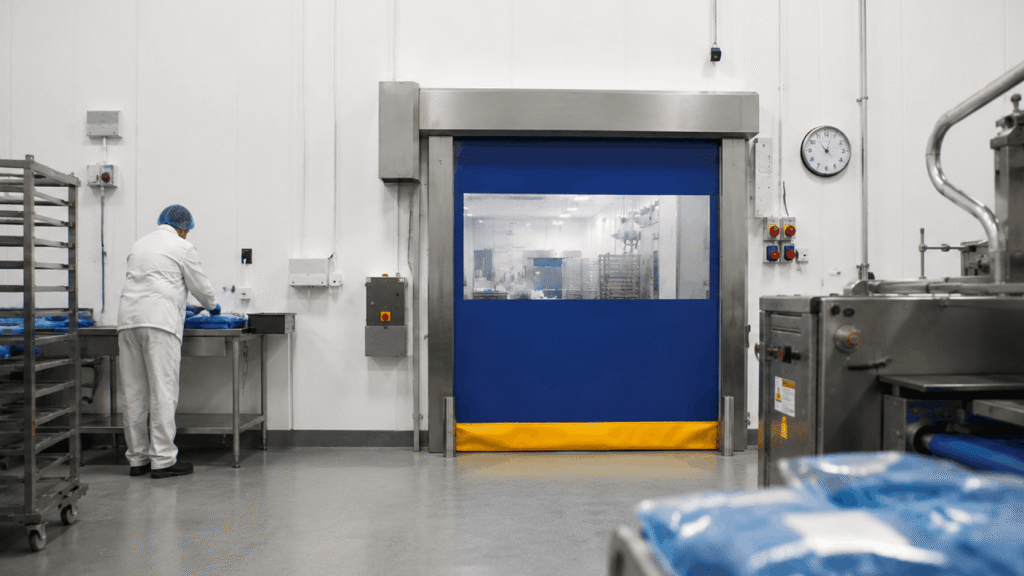
In high‑traffic processing environments, a solution such as the Ardent Stainless Steel High Speed Door provides both hygienic construction and rapid operation, allowing goods and personnel to move quickly without compromising cleanliness or temperature control.
Pharmaceutical & Cleanroom Facilities
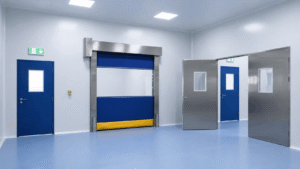
Pharmaceutical manufacturing and cleanroom environments demand even tighter environmental control. Surfaces must support strict contamination management protocols and be capable of regular sanitisation without deterioration.
Material choice is critical in these spaces. Stainless steel’s resistance to corrosion and its ease of cleaning make it well suited to controlled environments where hygiene, air quality and regulatory compliance must be maintained at all times.
High speed operation also supports workflow efficiency while helping maintain separation between controlled zones.
Laboratories & Healthcare Settings
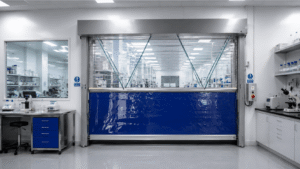
In laboratories and healthcare environments, infection control and cleanliness are key. Infrastructure must support routine cleaning and disinfection without creating areas where dirt or bacteria can accumulate.
Stainless steel door systems provide durability alongside hygienic performance, making them suitable for environments where both cleanliness and reliability are essential.
Across all of these sectors, the key consideration is simple: the door must perform operationally while supporting the facility’s hygiene strategy. The Ardent Stainless Steel High Speed Door is purpose‑built with this balance in mind.
High‑Humidity or Corrosive Environments
Stainless steel high speed doors are not only used where hygiene audits are a concern. They are also a practical choice in environments exposed to persistent moisture or corrosive conditions.
Facilities that carry out constant washdowns, operate in steam‑heavy production areas or rely on aggressive cleaning chemicals can quickly experience material degradation if doors are not specified correctly.
Humidity and condensation also accelerate corrosion. In coastal or salt‑heavy locations, airborne contaminants can further compromise mild steel components.
Corrosion can affect:
- Door frames and support structures
- Fixings and fasteners
- Internal components
- Overall lifespan and reliability
Once protective coatings begin to deteriorate, rust can spread beneath the surface, leading to increased maintenance and premature replacement.
In these cases, specifying stainless steel is a durability decision as much as a hygiene one. It provides long‑term resistance to corrosion, helping maintain structural integrity and reduce ongoing maintenance demands.
Cold Storage & Temperature‑Controlled Zones
Cold storage environments present a unique combination of moisture and temperature fluctuation.
Frequent access between chilled, ambient and freezer zones creates condensation and frost around door openings. When moisture repeatedly settles on metal surfaces, corrosion risk increases, particularly if the door is exposed to regular cleaning or defrost cycles.
In temperature‑controlled environments, maintaining structural integrity and sealing performance is essential. Stainless steel components are better suited to cope with moisture exposure and repeated temperature variation without degrading.
The Ardent Stainless Steel High Speed Door is suitable for cold storage applications, combining hygienic construction with fast operation to support both cleanliness and temperature control.
Signs It Might Be Time to Upgrade
In many cases, the need for stainless steel becomes clear through day‑to‑day operational issues.
If you are experiencing any of the following, it may be time to review your current door specification:
- Rust forming around fixings or frame edges
- Paint blistering, flaking or discolouration
- Frequent seal replacement due to moisture damage
- Increasing difficulty passing hygiene audits
- Rising maintenance costs linked to corrosion
- Visible deterioration in washdown or high‑humidity zones
These signs suggest that the existing door material may not be suited to the operating environment. Upgrading to a stainless steel high speed door can provide improved durability, easier cleaning and greater long‑term reliability.
Internal vs External Use in Hygiene‑Critical Areas
Stainless steel high speed doors are not limited to internal clean zones. They can play an important role in both internal and external applications within hygiene‑sensitive facilities.
Internally, they help maintain separation between production areas, high‑care zones and general access routes. Fast operation reduces exposure time while the stainless steel construction supports effective cleaning routines.
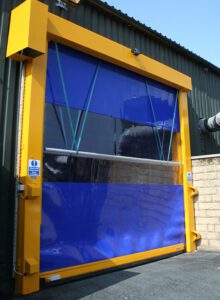
Externally, food and beverage facilities often require direct yard access for deliveries or dispatch. In these cases, doors may be exposed to weather conditions alongside regular washdowns. Combining environmental exposure with hygiene requirements makes corrosion resistance particularly important.
Stainless steel provides a practical solution in both scenarios, offering durability against the elements while maintaining a cleanable, non‑porous surface finish.
Installation Matters as Much as Material
Selecting stainless steel is only part of the equation. Correct installation is essential to ensure hygienic performance and long‑term reliability.
Hygienic installation practices help avoid contamination traps, ensure smooth surface transitions and maintain proper sealing around the opening. Poorly fitted frames or gaps around fixings can undermine both cleanliness and thermal performance.
BID Group provides nationwide supply, installation and ongoing maintenance support, ensuring that stainless steel high speed doors are specified and fitted correctly for their operating environment.
With experienced engineers and long‑term service capability, the focus is not just on supplying a door, but on delivering a durable, compliant access solution that supports your facility for years to come.
Upgrade to the Ardent Stainless Steel High Speed Door
If your facility operates in a hygiene‑critical environment, the Ardent Stainless Steel High Speed Door offers the perfect solution. Manufactured in the UK and designed for heavy‑duty, high‑frequency use, it combines food‑grade stainless steel construction with rapid operation, energy efficiency and crash‑resistant safety features.
Whether you are upgrading existing doors or specifying for a new project, BID Group can provide expert guidance, nationwide installation and ongoing maintenance support.
Speak to our team today to find out if the Ardent Stainless Steel High Speed Door is right for your facility.
Stainless Steel High Speed Door FAQS
Is stainless steel always required for food production facilities?
Not always, it depends on the specific area within the facility. Low‑risk or dry zones may not require stainless steel, whereas high‑care, washdown or high‑humidity areas often benefit from corrosion‑resistant construction.
What grade of stainless steel is typically used for industrial doors?
Most hygienic industrial door systems use food‑grade stainless steel, commonly 304 grade, with 316 grade available for more aggressive or saline environments. The appropriate grade depends on exposure to chemicals, moisture levels and environmental conditions.
Are stainless steel high speed doors more expensive to maintain?
In most hygiene‑critical environments, they can actually reduce long‑term maintenance costs. Because stainless steel resists corrosion and withstands aggressive cleaning, it often requires fewer repairs related to rust, coating failure or structural degradation compared to coated mild steel alternatives.
Can stainless steel high speed doors be integrated with access control systems?
Yes. Stainless steel high speed doors can be integrated with a range of control options, including radar sensors, push buttons, key switches, interlocking systems and access control integration. This makes them suitable for controlled hygiene zones or restricted production areas.
Do stainless steel doors help with pest control?
While no door alone replaces a pest control strategy, high speed operation combined with tight sealing can help reduce the amount of time openings are exposed, limiting opportunities for pest ingress, particularly in food production and storage facilities.
Are stainless steel high speed doors suitable for external wind exposure?
Yes, when correctly specified. For external applications, wind load requirements and environmental exposure should be assessed to ensure the door system is suitable for the location. Stainless steel construction provides added durability against weather and corrosion.
How long do stainless steel high speed doors typically last?
Service life depends on usage levels, environment and maintenance, but in corrosive or washdown environments, stainless steel construction can significantly extend lifespan compared to coated alternatives. Regular servicing further ensures optimal performance and longevity.