Best Practices for Warehouse Loading Dock Design
Best Practices for Warehouse Loading Dock Design
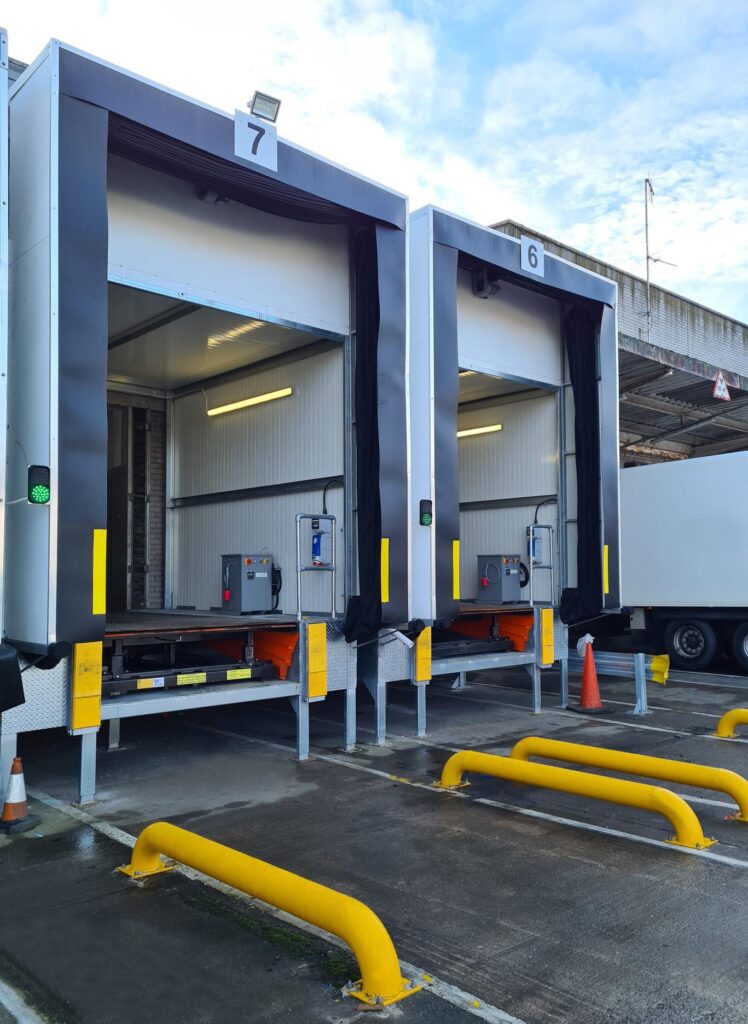
Loading docks are vital hubs in warehouse operations, serving as the gateway for goods moving in and out. Efficient loading dock design is crucial not only for the swift movement of products but also for the safety of personnel.
In this guide, we will explore the key design considerations that enhance both efficiency and safety at your warehouse loading docks.
Essential Components of Warehouse Loading Dock Design
Understanding Warehouse Dock Height
The height of the loading dock is fundamental to smooth warehouse operations. An appropriate dock height ensures that vehicles can be loaded and unloaded quickly and with minimal effort, which is essential for maintaining a fast-paced workflow.
The standard dock height for most HGVs is 1250mm, but variations may be necessary based on specific vehicle requirements or handling equipment. Ensuring your dock height matches the fleet of vehicles primarily used can significantly reduce the risk of damage to goods and equipment, and it speeds up the loading process.
Optimising Warehouse Loading Bay Layout
The layout of the loading bay is critical in maximising efficiency and safety. An optimal layout will consider factors such as the number and types of docks needed, the direction of vehicle approach, and the integration of traffic management systems to prevent congestion.
Designing loading bays to accommodate sufficient space for trucks to manoeuvre easily while allowing safe pedestrian movement is crucial. Additionally, the layout should facilitate the logical flow of goods into and out of the storage areas to minimise handling times. Effective use of space not only speeds up operations but also enhances safety by reducing the likelihood of accidents in busy loading areas.
Selecting the Right Loading Dock Equipment
Dock levellers are essential components that bridge the gap between dock doors and freight vehicles, facilitating the safe and efficient transfer of goods. There are primarily two types of dock levellers commonly used in warehouse environments:
Telescopic Dock Levellers
These levellers feature an extendable lip that can precisely reach the truck bed, providing a seamless connection for handling goods. Telescopic levellers are particularly useful in situations where the distance between the dock and the vehicle varies or is greater than usual. Their ability to adjust makes them ideal for warehouses that receive a wide variety of vehicle types.
Hinged Lip Dock Levellers
These are equipped with a pivoting lip that swings out to bridge the gap between the dock and the truck. They are simpler in design and operation, making them cost-effective and suitable for environments where trucks have standardised bed heights. Hinged lip levellers are robust and reliable, offering a practical solution for fast-paced loading and unloading tasks.
Both types of dock levellers play a crucial role in enhancing operational flexibility and efficiency, reducing labour costs, and minimising the risk of injury during cargo handling.
Integrating Dock Seals and Shelters
Dock seals and shelters are important for maintaining environmental control and protecting goods and personnel from external elements such as wind, rain, and dust.
Dock Seals
Dock Seals are foam pads that vehicles press against when docked. They form a tight seal around the top and sides of a trailer, which helps to maintain the internal temperature and prevents the ingress of weather elements and pests.
Dock Shelters
Dock shelters provide a flexible enclosure that adapts to various vehicle sizes, creating a covered space between the warehouse and the vehicle. This setup is particularly beneficial for loadings that require climate control or where the warehouse environment needs to be kept clean from external contaminants.
Both seals and shelters enhance energy efficiency by minimising the loss of heated or cooled air, which can translate into significant cost savings over time.
Loading Dock Safety and Efficiency
Dock Buffers
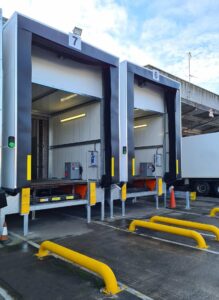
Our heavy-duty interchangeable steel & poly constructed buffers are designed to absorb significant vehicle impact. This helps to reduce the risk of damage between structures and vehicles.
Wheel Guides
Our floor-mounted, high-visibility wheel guides ensure vehicles reverse in perfect alignment with a Dock Leveller for safe and efficient loading and unloading.
Adequate Lighting
Good lighting is crucial for visibility and safety, especially during the early morning or late evening hours.
Warning Systems and Signage
Clearly visible signs and auditory or visual warning systems help prevent accidents and ensure that safety protocols are followed.
Tailored Loading Dock Solutions from BID Group
At BID Group, we understand that each warehouse has unique operational challenges and requirements. That’s why we offer custom-manufactured loading equipment, designed to meet the specific needs of your warehouse.
Our team of experts works closely with clients to assess their site conditions, traffic flow, and load handling specifications to develop bespoke solutions. Whether you need a dock leveller with a specific load capacity or custom dimensions for dock shelters, BID Group can deliver.
Our ability to tailor designs ensures that your loading dock equipment enhances operational efficiency, safety, and compliance with industry standards.
24/7 Maintenance and Support
Reliability and longevity of loading dock equipment are critical for maintaining smooth warehouse operations. At BID Group, we provide comprehensive maintenance and support, keeping your equipment in optimal condition.
Our service includes regular inspections, scheduled maintenance, and immediate repairs to minimise downtime.
We also offer 24/7 emergency support to ensure that any issues are promptly addressed, reducing the risk of operational disruptions. This round-the-clock support is crucial for warehouses that operate continuously and require immediate assistance to maintain workflow efficiency.
Warehouse Loading Dock FAQs
What are the best practices for warehouse loading bay design?
The best practices for warehouse loading bay design include ensuring sufficient space for safe vehicle manoeuvring, installing appropriate dock levellers and seals, implementing efficient traffic management systems, and using energy-efficient lighting. Safety should be a priority, with clear markings, signage, and pedestrian barriers to prevent accidents.
How often should loading dock equipment be serviced?
Loading dock equipment should typically be serviced at least once a year. However, for facilities with high usage, more frequent servicing—every six months or even quarterly—might be necessary to ensure the equipment remains in top condition and operates safely.
Can loading docks be customised for any warehouse design?
Yes, loading docks can be customised for any warehouse design. Customisation can address specific needs such as space constraints, type of goods handled, and traffic flow. BID Group specialises in creating tailored solutions that fit the unique layout and functional requirements of each warehouse.
Contact BID Group Today
Discover how BID Group can revolutionise your loading bay operations. Fill out our contact form here and one of our specialists will be in touch to discuss your unique requirements.