How Do Automatic Rising Arm Barriers Work?
How Do Automatic Rising Arm Barriers Work?
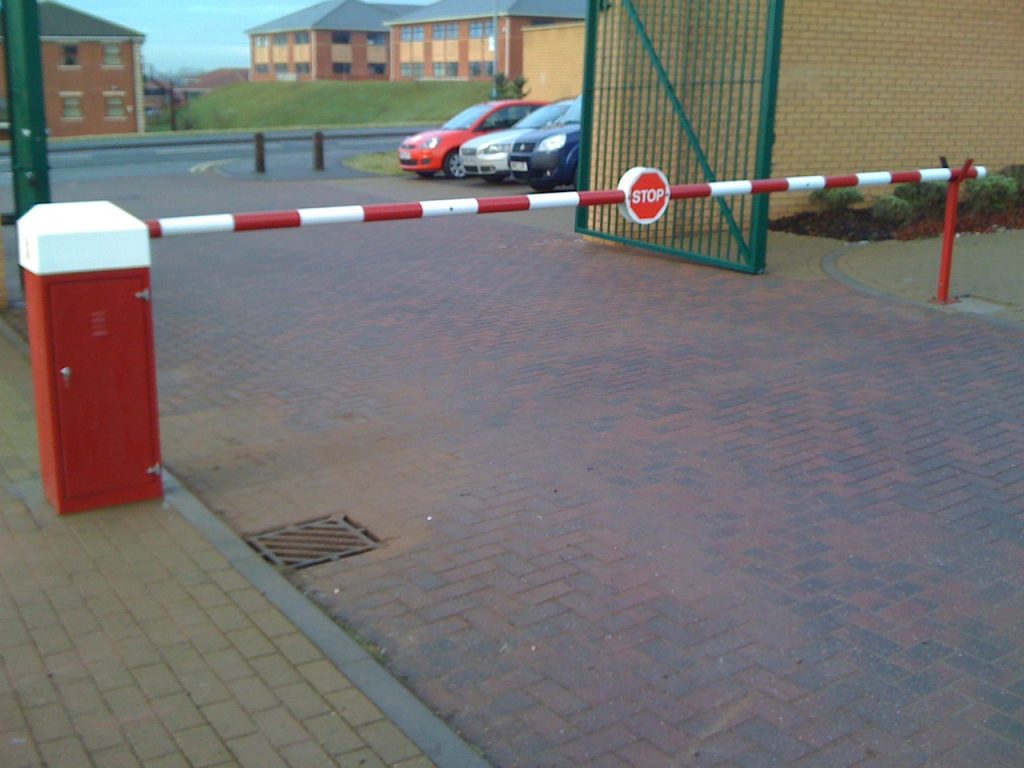
Rising arm barriers have become a staple of modern access control, particularly in commercial and industrial environments where managing vehicle flow and site security is essential. Whether it’s controlling access to a busy logistics hub or managing car park traffic, these systems offer a reliable, efficient solution that balances safety and convenience.
Thanks to their versatility and high-performance design, rising arm barriers are a popular choice for businesses looking to regulate vehicle entry without compromising on speed or reliability.
From small commercial premises to large-scale distribution centres, the ability to control access at the touch of a button has made automatic barriers a go-to perimeter security option.
At BID Group, we specialise in the installation and maintenance of commercial barrier systems tailored to your operational needs.
What Is a Rising Arm Barrier?
A rising arm barrier works by lifting a horizontal boom to allow or restrict access to vehicles. These barriers can be operated manually, but most commercial and industrial sites opt for automated versions powered by hydraulic or electromechanical motors for smoother, more consistent performance.
The core of any rising arm barrier system is the boom arm, which lifts vertically to permit entry. This is connected to a motorised drive mechanism housed in a weatherproof cabinet, where a control unit governs the opening and closing sequence.
For automated models, safety features like LED lights, safety sensors and breakaway arms are included to protect both vehicles and pedestrians.
Where Are They Used?
You’ll often find rising arm barriers at car parks, business parks, and transport depots or essentially anywhere that requires managed access to vehicles throughout the day. They’re also widely used in the public sector, such as ambulance stations and council facilities, where secure access is essential but traffic flow cannot be disrupted.
From warehouse entrances to motorway maintenance depots, these systems can be tailored to suit your site layout, vehicle volume, and access control preferences.
How Do Automatic Rising Arm Barriers Work?
The Basic Operation Cycle
An automatic rising arm barrier is designed to manage vehicle access with minimal intervention. The cycle begins when a signal is received. This could be from an access control system, a remote fob, a keypad entry, or an ANPR (Automatic Number Plate Recognition) camera.
Once authorised, the motorised mechanism raises the barrier arm smoothly and swiftly to allow the vehicle through.
After the vehicle has passed, the arm either lowers automatically based on a timed delay or waits for a secondary signal (such as from a sensor or control system) to complete the cycle.
The system resets, ready for the next vehicle. This seamless operation makes rising arm barriers ideal for locations with a steady flow of traffic throughout the day.
Integration with Access Control Systems
We regularly integrate our barrier systems with a wide range of access control technologies to suit different environments. For example, ANPR systems can be used to automatically recognise pre-approved vehicles and trigger entry without driver interaction.
Keypads, RFID tags, and fobs are often used in private facilities or staff car parks, while intercoms or remote access systems can be operated from a gatehouse or control room.
This level of integration not only improves security but also allows for full audit trails and user access logs when connected to a centralised control platform.
Sensor Technology and Safety Mechanisms
To ensure safe and reliable operation, our rising arm barriers come with multiple built-in safety features. Photocell sensors monitor for any obstructions beneath the barrier arm and will pause movement if a person or vehicle is detected.
Induction loops installed in the ground detect vehicle presence and can prevent the barrier from lowering prematurely.
In the event of a power outage or emergency, the system includes a manual override, allowing the arm to be lifted or lowered manually. Emergency stop functions can also be activated when required to prevent accidents or unauthorised access.
Benefits of Using Rising Arm Barriers
Controlled Access and Enhanced Security
One of the main reasons our clients choose rising arm barriers is for their ability to restrict access effectively. Only authorised vehicles can enter or exit, significantly reducing the risk of trespassing or unauthorised entry.
With the right configuration, they also deter tailgating and forced entry attempts, particularly when paired with access logs or CCTV.
High-Cycle Performance and Durability
Our automatic barriers are built for demanding environments. Many sites, such as transport depots or hospital entrances, require equipment that can operate continuously without overheating or stalling.
That’s why we supply and install barriers with 100% duty cycle motors, ensuring smooth performance even at peak times.
Whether it’s managing hundreds of vehicle movements per day or operating 24/7, you can count on our barriers to deliver consistent results.
Customisable Options
Every site is different, which is why we offer rising arm barriers in a range of configurations. Arms can be supplied in various lengths to accommodate standard or wide vehicle entrances.
Additional customisation is available too, from integrated LED lighting and warning signage to barrier skirts that increase visibility and act as an added deterrent.
We also offer both automatic and manual models, allowing you to choose a setup that fits your operational needs and budget.
Maintenance and Compliance
Like any mechanical system, rising arm barriers require regular servicing to maintain performance and prevent unexpected failures.
Over time, wear and tear on components such as motors, hinges, and sensors can lead to reduced efficiency or even complete breakdown. With scheduled maintenance, we can identify and address these issues early, helping you avoid costly downtime or emergency repairs.
Regular checks also keep your system running smoothly, ensuring that your access control remains secure and your operations continue without disruption.
Health and Safety Considerations
All rising arm barrier systems must be installed and maintained in accordance with UK safety regulations, including the BS EN 12453 standard. This ensures the safe operation of automatic systems and protects both vehicles and pedestrians.
As part of our maintenance visits, we test key safety components such as photocells, induction loops, and emergency release mechanisms. If any issues are identified, we’ll provide clear recommendations to bring the system back into full compliance.
Our goal is to ensure that your access control system doesn’t just work, it operates safely, reliably, and within the law.
BID Group Maintenance Contracts
We offer tailored maintenance packages designed to suit the demands of your site. Whether your barrier operates a few times a day or several hundred, we’ll build a servicing schedule that keeps it working at its best.
By working with us, you’ll have access to experienced engineers, rapid response times, and ongoing compliance support. Many of our clients also benefit from our wider perimeter security expertise, knowing they have one trusted provider handling it all.
Why Choose BID Group for Rising Arm Barrier Installation
At BID Group, we bring decades of experience delivering access control and perimeter security solutions across a range of sectors, including logistics, retail, public services, and manufacturing.
When you work with us, you’re getting more than just a barrier. We offer a full turnkey service, from civil works and foundations to barrier supply, access control integration, and long-term maintenance support.
Every project is managed by our in-house team, ensuring quality, compliance, and peace of mind from day one.
Rising Arm Barriers FAQs
What is an automatic rising arm barrier?
An automatic rising arm barrier is a motorised access control system that lifts a horizontal arm to allow or restrict vehicle entry. It’s commonly used in car parks, industrial estates, logistics yards, and other secured entry points.
How is a rising arm barrier powered?
These barriers are typically powered by electric motors, which can be hydraulic or electromechanical depending on the speed, duty cycle, and site conditions. Both systems offer smooth, reliable operation when professionally installed and maintained.
Can rising arm barriers be integrated with ANPR systems?
Yes. Rising arm barriers can be integrated with ANPR cameras for automatic vehicle recognition, as well as other access systems like RFID fobs, keypads, intercoms, or full building management solutions. This allows for seamless, controlled access.
Do I need planning permission for a rising barrier?
It depends on where the barrier is being installed. Most private industrial or commercial sites don’t require planning permission, but installations near public roads, listed buildings, or in conservation areas may need formal approval. We carry out full site assessments to ensure compliance.
How long do rising arm barriers last?
With the right installation and a regular maintenance schedule, rising arm barriers can operate effectively for over 10 years.
Using durable materials and high-duty cycle motors ensures long-term reliability, even in high-traffic areas.
Does BID Group install and maintain automatic barriers?
Absolutely. We install, maintain, and repair a wide range of rising arm barrier systems across the UK. Whether you need a new installation, integration with access control, or ongoing servicing, we provide a complete solution.