How to Choose the Right Steel Door Set for Commercial & Industrial Buildings
How to Choose the Right Steel Door Set for Commercial & Industrial Buildings
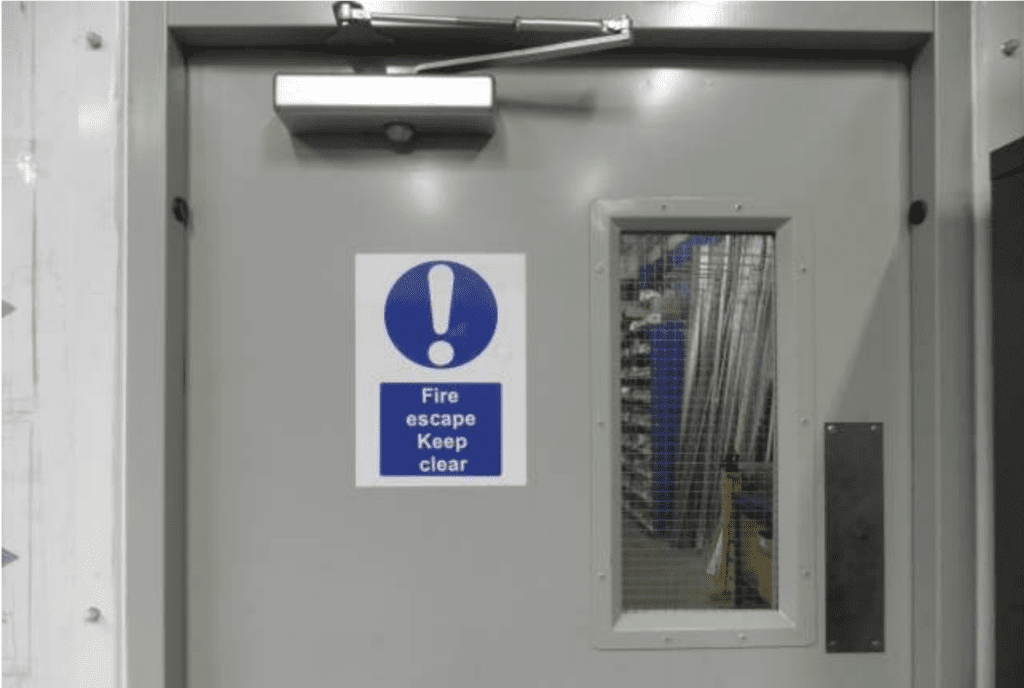
If you’re upgrading existing access points or specifying doors for a new commercial or industrial building, and thinking about installing steel doors, it’s worth considering a few things first.
In this guide, we’ll explain how factors like fire safety, security and application can affect your selection when it comes to choosing the right steel door set for your premises.
What Is a Steel Door Set?
Before choosing the right option, it helps to understand what a steel door set actually includes.
A steel door set is supplied as a complete unit: the door leaf, frame and hardware designed to work together.In commercial and industrial buildings, this is the standard approach.
It’s different from replacing just the door itself within an existing frame. A full door set is installed as one system, which makes it easier to ensure it meets the required safety and performance standards.
Steel door sets are commonly used for:
- Personnel access doors
- Fire escape routes
- Plant and service rooms
- Secure storage areas
- Back‑of‑house or restricted zones
The correct specification depends on how and where the door will be used, which is why defining its purpose is the first step.
 Step 1: Define the Door’s Purpose
Steel door sets are used in many different parts of a building, and the requirements can vary significantly depending on their role.
Personnel Access
If the door is mainly for day‑to‑day staff access, durability and ease of use will be key. Consider how often it will be opened, whether it needs controlled access, and how it fits into overall traffic flow.
Emergency Escape Routes
Doors on escape routes must align with the building’s fire strategy. This may affect fire rating, hardware choice and opening direction. Compliance is critical here, and specification should always reflect the building’s safety requirements.
High‑Security Areas
Plant rooms, storage areas and restricted zones may require enhanced security features. Locking systems, reinforced hardware and access control integration are often important considerations.
Service & Back‑of‑House Areas
In warehouses or production facilities, doors may be exposed to impact, frequent use or harsher environments. In these cases, robustness and long‑term durability tend to take priority.
Clearly defining the door’s function at the start makes the rest of the specification process much more straightforward.
Step 2: Determine Fire Rating Requirements
If the door forms part of a fire compartment or escape route, fire rating will be a key consideration.
In commercial and industrial buildings, fire doors are used to slow the spread of fire and smoke between different areas. The required rating depends on the building’s fire strategy and how the space is used. For example, plant rooms, stairwells and corridors often have specific fire protection requirements.
It’s important not to guess this. The rating should align with architectural drawings, fire risk assessments or building control guidance.
Beyond the rating itself, hardware also matters. Items such as door closers, seals and panic hardware must be compatible with the door’s fire performance. Installation is equally important, even a correctly rated door can fail to perform if it’s not fitted properly.
If there’s any uncertainty, this is typically the stage where consulting a specialist or reviewing the building’s fire documentation is essential.
Step 3: Assess Security Requirements
Different doors require different levels of security.
For low‑risk internal areas, a standard locking arrangement may be enough. However, doors protecting valuable equipment, sensitive materials or restricted spaces may require more robust hardware or reinforced components.
You should also consider:
- Who needs access?
- Will the door be linked to an access control system?
- Does it need to prevent unauthorised entry from outside?
- Is it in a publicly accessible area?
External doors generally require a higher level of security than internal ones, particularly in unsupervised or exposed locations.
Getting the balance right is important. Over‑specifying can increase cost unnecessarily, while under‑specifying can create security vulnerabilities. The key is to match the door’s security level to the actual risk.
Step 4: Consider Location: Internal vs External
Where the door is installed will influence its specification.
Internal Doors
Internal steel door sets are typically used for compartmentation, plant rooms, storage areas or separating warehouse and office spaces. Here, the focus is usually on fire performance, durability and access control rather than weather protection.
You may also need to think about noise separation if the door sits between loud and quiet areas.
External Doors
External doors have additional requirements, such as weather exposure, temperature changes and higher security risks. The finish and sealing, therefore, become much more important, particularly in exposed or coastal environments.
If the building is temperature‑controlled, the door’s thermal performance becomes a key factor. Poor insulation can put extra strain on heating or cooling systems, resulting in inefficient operations and higher costs.
Step 5: Size, Configuration & Building Constraints
Once the purpose and location are clear, practical constraints come into play.
Single or Double Doors
For standard personnel access, a single door leaf is often sufficient. Wider openings, higher foot traffic, or the need to move equipment through the doorway may require a double door configuration.
Think about how the space is used day to day, not just how it looks on a drawing.
Traffic Flow & Accessibility
Consider:
- How many people will use the door?
- Does it form part of an accessible route?
- Does it need to open in a specific direction?
Accessibility requirements may influence clear opening widths, threshold details and hardware selection.
Structural Opening
The size and condition of the structural opening can also affect your options. In refurbishment projects especially, existing openings don’t always match standard configurations, so accurate measurement and early planning are important.
Taking the time to review these practical details helps avoid installation issues later in the project.
Step 6: Hardware & Operational Requirements
The hardware you choose can significantly affect how the door performs day to day.
Panic Hardware & Emergency Egress
If the door forms part of an escape route, panic hardware may be required to allow safe and immediate exit. The type of hardware must align with the building’s fire strategy and occupancy type.
Door Closers
Closers are often necessary on fire doors to ensure they return to the closed position after use. In busy environments, the quality and adjustment of the closer can make a noticeable difference to usability and longevity.
Frequency of Use
A door used occasionally will have very different demands compared to one opened hundreds of times per day. Hinges, closers and locking systems should reflect expected usage levels.
Hardware might seem like a small detail, but it plays a major role in safety, compliance and long‑term reliability.
Step 7: Finish & Aesthetic Considerations
While steel door sets are often chosen for practicality, appearance still matters, particularly in public‑facing or office environments.
Finish
The door’s finish should suit both the environment and the building’s overall look. In industrial settings, durability and corrosion resistance are usually the priority. In offices, schools or retail spaces, visual consistency may be just as important.
Colour choice can also help doors blend in or stand out depending on whether they’re intended for general access or emergency use.
Glazing & Visibility
In some locations, vision panels improve safety by allowing people to see whether someone is approaching from the other side. They can also help bring light into internal corridors or enclosed spaces.
Ventilation
Where airflow is required, such as plant or service rooms, integrated ventilation panels may be necessary.
Even in industrial buildings, considering how a door looks and functions within its surroundings can make a noticeable difference to both usability and overall presentation.
 Steel Door Set Specification Checklist
Before finalising your specification, make sure you can clearly answer the following:
- What is the door’s primary function?
- Does it form part of a fire compartment or escape route?
- Is it being installed internally or externally?
- What level of security is required for that area?
- How frequently will it be used?
- Are there accessibility requirements to consider?
- Does it need glazing for visibility or ventilation for airflow?
Running through these questions early makes it much easier to choose a door that actually suits the building.
Need Guidance on Specification?
If you’re unsure about fire rating requirements, hardware options or the right configuration for your building, our team can offer expert guidance.
At BID Group, we help commercial and industrial clients specify steel door sets that align with their building layout, safety obligations and day‑to‑day use.
You can explore our Steel Hinged Personnel Door Sets for technical details, or speak to our team for tailored advice on the right solution for your project.
Steel Door Set FAQs
What is the difference between a steel door and a steel door set?
A steel door typically refers to the door leaf itself, whereas a door set includes the frame and compatible hardware supplied as one complete system.
Are steel door sets suitable for refurbishment projects?
Yes. They are commonly installed in both new builds and refurbishments, although existing structural openings should always be checked carefully before ordering.
Can steel door sets be integrated with access control systems?
In many cases, yes. Locks and hardware can often be configured to work with keypads, card readers or other access control systems.
How long does a commercial steel door set last?
Lifespan depends on usage, environment and maintenance, but steel door sets are generally considered a long‑term solution in commercial and industrial settings.
Do steel door sets require regular maintenance?
Routine checks of hinges, closers and locking mechanisms are recommended, particularly for fire doors or high‑traffic entrances.