How Vehicle Height Restriction Barriers Prevent Damage and Improve Safety
How Vehicle Height Restriction Barriers Prevent Damage and Improve Safety
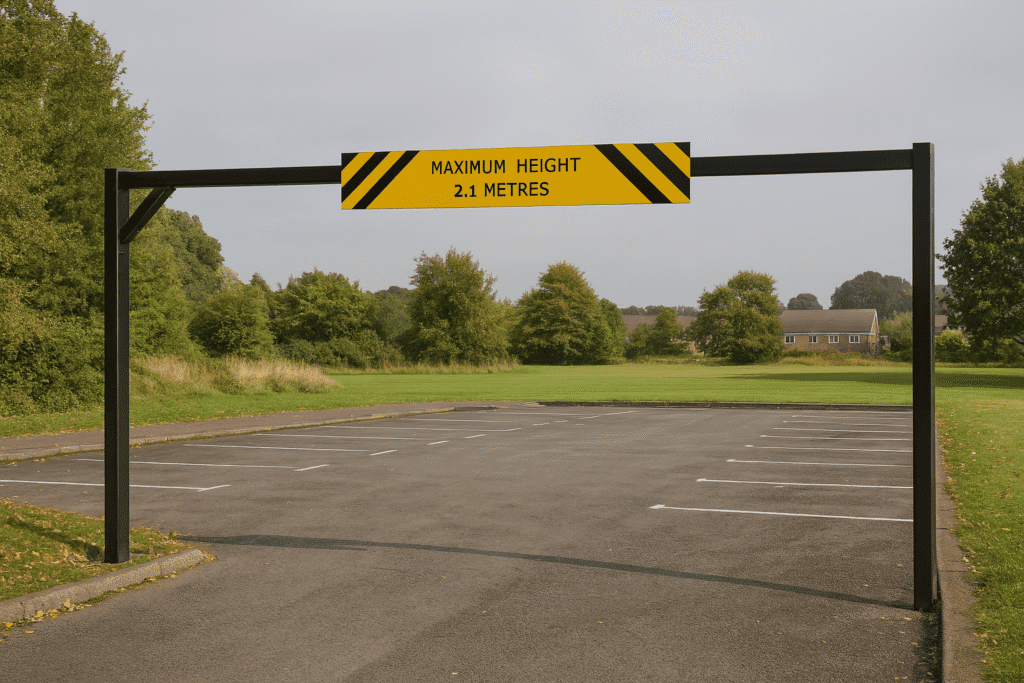
Vehicle height restriction barriers are essential safety fixtures designed to prevent oversized vehicles from entering areas with limited vertical clearance.
Whether installed at the entrance of a car park, a service yard, or a covered loading bay, these barriers act as the first line of defence against accidental collisions that can cause serious damage and disruption.
As commercial, retail, and logistics sites continue to manage a wider variety of vehicle traffic, from delivery vans and HGVs to customer cars, the need for clear, physical access control has never been greater.
Without proper height restriction measures in place, one over-height vehicle can cause thousands of pounds worth of structural damage or force a shutdown of operations.
By installing a height restriction barrier, you’re protecting both your infrastructure and the people who use your site. These barriers help reduce repair costs, improve safety, and ensure your site remains compliant and accessible for the right types of vehicles.
What Is a Height Restriction Barrier?
Design and Materials
Height restriction barriers consist of an overhead crossbar or boom arm that spans the width of an access point.
This arm is typically mounted on vertical posts, either in a fixed position or with a swing or hinge mechanism that allows it to be moved or adjusted when necessary.
Our barriers are made from heavy-duty materials like galvanised steel or aluminium, ensuring they withstand all weather conditions and daily vehicle impact risks.
Many barriers are powder-coated in high-visibility colours and fitted with reflective signage or warning decals to enhance driver awareness, particularly in low-light or high-traffic settings.
Some sites benefit from a fixed-height barrier, while others require a hinged or removable version that allows for occasional access by authorised high-sided vehicles. We’ll always recommend the most suitable type based on your operational needs.
Where They’re Typically Installed
Height restriction barriers are widely used across sectors where mixed vehicle traffic is a daily reality. We regularly install them at the entrances to:
- Retail and supermarket car parks, to deter vans, lorries, or campervans from occupying spaces intended for customers.
- Distribution centres and warehouses, where separating HGV and smaller vehicle access can streamline traffic and reduce risk.
- Low-clearance underpasses and service roads, especially in older developments where vertical headroom is limited.
- Hospitals, airports, and university campuses, where vehicle access must be carefully controlled around pedestrian areas and critical infrastructure.
Wherever they’re placed, these barriers offer peace of mind by ensuring only the right vehicles enter the right spaces.
How Height Restriction Barriers Improve Site Safety
Preventing Vehicle Collisions
One of the most important functions of a height restriction barrier is to stop oversized vehicles before they reach areas where clearance is limited.
Without this safeguard in place, it’s easy for HGVs, tall vans, or other large vehicles to cause serious damage by colliding with structures not designed for their height.
By acting as a clear physical deterrent, these barriers protect everything from entry canopies and overhead signage to loading bay doors and internal pipework.
Whether you’re managing a busy logistics yard or a public-facing retail site, that early intervention can prevent thousands of pounds in damage and weeks of disruption.
Enhancing Pedestrian Safety
Height restrictors also play a key role in separating different types of traffic, especially in locations with high footfall. By physically limiting access, they help keep larger vehicles away from pedestrian-heavy areas such as retail car parks, hospital drop-off zones, or school entrances.
This improves on-site safety by reducing the risk of vehicle-pedestrian interactions, particularly in spaces where visibility is limited or traffic flow is difficult to monitor. In the long run, it supports a safer, more predictable environment for everyone using the site.
Traffic Management Benefits
Effective traffic management depends on controlling who goes where. Height restriction barriers help separate HGV routes from those intended for staff vehicles, visitors, or customers. This makes site access more efficient, reduces bottlenecks, and ensures your operations remain smooth and secure.
For on-site teams, it also means better visibility and fewer surprises, especially when working in complex environments like distribution hubs, depots, or service yards.
Reducing Property Damage and Associated Costs
Common Damage Scenarios Prevented
It only takes one incident to cause costly and time-consuming damage. We’ve seen cases where an overheight vehicle has collided with entrance canopies, taken out lighting rigs, or cracked overhead drainage systems. These accidents often lead to immediate operational shutdowns, safety investigations, and expensive repairs.
By installing a height restriction barrier, you significantly reduce the risk of these scenarios, giving you more control over access and peace of mind that your site is protected around the clock.
Long-Term Financial Benefits
While a barrier might seem like a small addition, it can deliver major long-term savings. Fewer vehicle-related accidents mean fewer insurance claims, less structural damage, and lower ongoing maintenance costs.
In high-traffic environments, the right height restriction system also extends the lifespan of your entry points and infrastructure, helping you avoid downtime and maintain compliance. It’s a simple investment that delivers real return, especially when professionally installed and maintained.
Choosing the Right Height Restriction Barrier
Key Factors to Consider
When choosing a height restriction barrier for your site, there are a few key details to get right. First, you’ll need to define the maximum vehicle height allowed, based on the clearance of any overhead structures, internal gantries, or surrounding infrastructure.
Next, consider how often the entrance is used and by whom. High-traffic sites might benefit from hinged or drop-down models that allow occasional access for taller vehicles under supervision. Fixed barriers, on the other hand, are a solid, low-maintenance option for consistent restriction.
Visibility is another crucial factor. We always recommend using reflective tape, clear signage, and optional LED lighting to ensure drivers can see the barrier clearly, even in low light. The goal is always to prevent an incident before it happens.
Integration with Wider Site Security
A height restriction barrier should never be treated as a standalone fix. Instead, we see it as one part of a wider perimeter security solution, working alongside bollards, rising arm barriers, CCTV systems, and access control points.
The placement and configuration of the barrier should support your overall traffic management plan. It should direct vehicles effectively, protect vulnerable areas, and help ensure only the right vehicles can proceed beyond your site’s threshold. That’s the kind of joined-up approach that delivers genuine results.
BID Group Expertise in Barrier Installation
At BID Group, we handle every stage of the process, from the initial survey through to installation and long-term maintenance. Our civil engineering teams prepare the groundworks, our engineers install to spec, and our aftercare support ensures your investment stays compliant and functional for years to come.
We supply custom barriers tailored to your site’s unique needs. Whether you need extra clearance, adjustable swing options, or integrated lighting for better visibility, we’ll deliver a solution that’s built to last and ready to perform.
Height Restriction Barriers FAQs
What is a height restriction barrier?
A height restriction barrier is a fixed or hinged structure installed at site entrances to prevent vehicles over a certain height from entering.
Where should height restriction barriers be installed?
Loading bays, and low-clearance areas to prevent structural damage from tall vehicles.
What’s the standard clearance for a height barrier?
Typical heights range from 2.0 to 2.8 metres for car parks, but barriers can be customised to suit specific vehicle types and infrastructure.
Do height barriers need maintenance?
Yes, especially hinged or adjustable barriers. Regular checks ensure safety, visibility, and structural integrity over time.