Internal vs External High Speed Doors
Internal vs External High Speed Doors
High speed doors are used across a wide range of industrial environments, from internal warehouse zones to exposed external loading bays. While the core function remains the same: fast, reliable operation, the demands placed on the door can vary significantly depending on its location.
External openings must withstand wind loading, driving rain and temperature extremes. Internal doors are more commonly focused on temperature separation, hygiene control and high traffic flow between operational areas.
Because of this, not all high speed doors on the market are suitable for both applications.
Klimate high speed doors are engineered to perform in demanding industrial environments, whether installed internally or externally. Understanding how location affects performance requirements is key to specifying a door that delivers long-term reliability, energy efficiency and operational control.
Environmental Demands: External Openings
External high speed doors are exposed to conditions that internal doors don’t face. Wind loading, rain, temperature fluctuations and increased security risk all need to be considered at specification stage.
In busy industrial environments, external openings are often used for:
- Loading bays
- HGV and plant access
- Yard entrances
- Distribution centre dispatch points
These locations typically combine high traffic levels with exposure to the elements.
Wind Resistance & Structural Strength
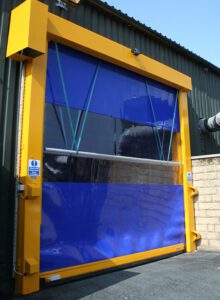
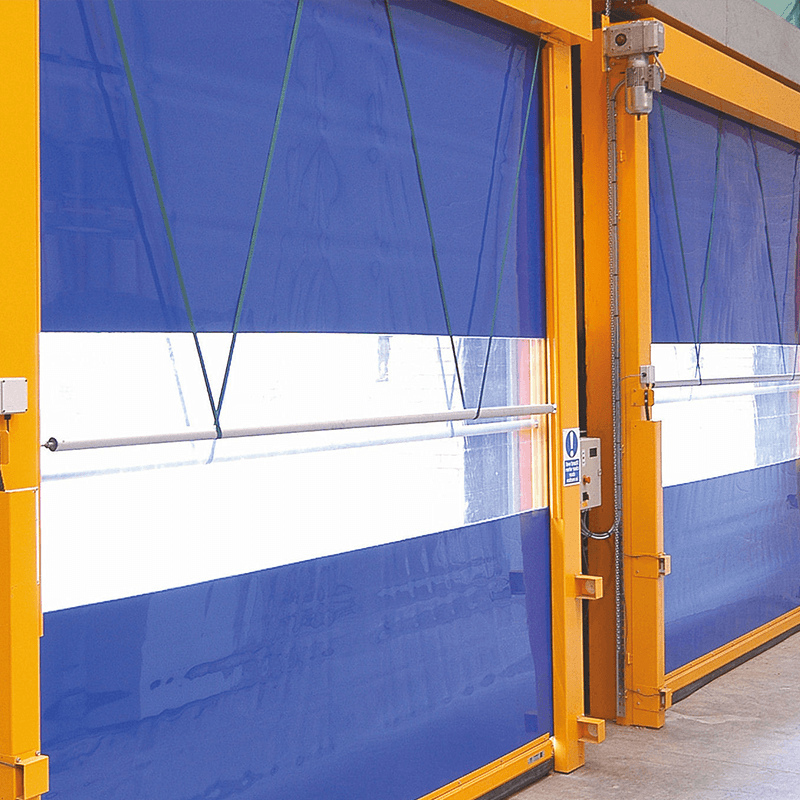
One of the most important considerations for external installations is wind loading. A door must be able to operate reliably without excessive curtain movement or strain on components.
Reinforced curtain systems, robust guide rails and wind bar systems are often required, particularly for larger openings. For wide access points, such as those used by articulated vehicles or heavy machinery, doors like the Ardent Oversize High Speed Door are specifically designed to maintain stability across greater spans.
Weather Protection & Thermal Separation
External doors also form part of the building envelope. When closed, they should provide effective sealing to help reduce heat loss in winter and limit warm air ingress during summer.
High speed operation plays a critical role here. Faster opening and closing cycles reduce exposure time, helping to maintain internal temperatures and improve overall energy performance.
Security & Controlled Access
External doors are naturally more exposed to unauthorised access. Rapid closing speeds, robust curtain construction and impact‑resistant design all contribute to improved security.
Klimate high speed doors are built to withstand demanding industrial use, providing both fast operation and durability in external environments.
Environmental Demands: Internal Openings
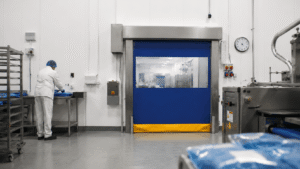
While internal high speed doors aren’t exposed to weather conditions, they may be used in more controlled and demanding environments to separate operational zones. These may include:
- Ambient to chilled areas
- Chilled to freezer transitions
- Clean production spaces
- High‑traffic warehouse aisles
In many cases, these doors will cycle far more frequently than an external opening.
High Cycle Speeds & Traffic Flow
Internal openings often sit along primary traffic routes. Forklifts, pallet trucks and staff may pass through continuously throughout the day.
Fast opening and closing speeds are essential to maintain workflow efficiency and reduce congestion. Features such as crash‑resistant curtains and automatic stop/reverse functionality also become particularly important in busy internal settings where accidental impacts are more likely.
Temperature Regulation Between Zones
One of the most common uses for internal high speed doors is temperature separation.
Where different areas of a facility operate at varying temperatures, rapid cycle speeds help reduce air transfer and maintain environmental stability. Shorter open times mean less strain on cooling systems and better energy efficiency overall.
In sub‑zero environments, the demands increase further. A solution such as the Klimate K2 High Speed Freezer Door is specifically designed to operate reliably in freezer conditions while maintaining the speed required for high‑traffic internal access.
Hygiene & Clean Environments
In food production, pharmaceutical and washdown environments, hygiene becomes a priority.
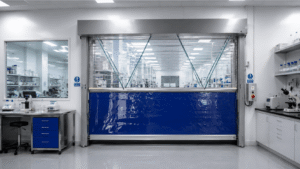
Doors may need corrosion‑resistant finishes, smooth surfaces for easy cleaning and materials suited to controlled environments.
The Ardent Stainless Steel High Speed Door is often specified in these applications, offering durability alongside suitability for hygienic settings.
Even though internal doors aren’t weather‑exposed, they must still withstand continuous operation, temperature differentials and potential impacts, making reliability just as important as with external installations.
Key Specification Differences: Internal vs External Installations
Although Klimate high speed doors are suitable for both internal and external use, the specification priorities can shift depending on the environment.
Understanding these differences helps ensure the door is configured correctly for long‑term performance.
| Consideration | Internal Installations | External Installations |
| Wind Resistance | Typically lower wind exposure | Must withstand wind loading and external pressure |
| Traffic Frequency | Often very high cycle rates | High traffic, but sometimes less frequent than internal workflow routes |
| Temperature Control | Zone separation (ambient, chilled, freezer) | Protecting internal temperatures from external climate |
| Opening Size | Standard operational openings | Often larger (HGV or plant access) |
| Hygiene Requirements | Common in food & pharma environments | Less common unless part of a controlled facility |
| Security Exposure | Controlled internal access | Greater risk of unauthorised external access |
In practice, many installations combine elements of both. For example, an external loading bay leading directly into a chilled warehouse may require strong wind resistance alongside fast cycle speeds to protect internal temperature stability.
The advantage of a high speed door range engineered for demanding industrial environments is flexibility. By adjusting factors such as curtain strength, wind reinforcement, finish, insulation and size, the door can be tailored to meet the specific challenges of its location.
Energy Efficiency & Operational Savings
One of the primary advantages of a high speed door is the impact it can have on energy performance and operational efficiency. The rapid open and close cycle, around 1 metre per second, significantly reduces the amount of time an opening is exposed, limiting heat loss, temperature fluctuation and air transfer.
Internal Energy Control
In facilities with multiple temperature zones, uncontrolled air movement can place continuous strain on heating and cooling systems.
Through reduced open time between areas such as ambient, chilled and freezer zones, high speed doors help to:
- Maintain more stable internal temperatures
- Reduce refrigeration system workload
- Lower overall energy consumption
- Minimise condensation and humidity transfer
In high‑traffic environments, even small reductions in exposure time can result in measurable long‑term savings.
External Climate Protection
For external openings, the door forms part of the building’s thermal envelope. Frequent opening of traditional roller shutters or sectional doors can lead to significant heat loss in winter and unwanted heat gain in summer.
High speed operation limits this, supporting more consistent internal conditions and helping reduce energy bills.
Productivity & Traffic Flow
High speed doors improve operational flow by reducing bottlenecks at busy openings. Faster vehicle access means less waiting time as well as smoother logistics and reduced disruption to workflow.
Choosing the Right High Speed Door for Your Site
When comparing internal and external high speed doors, the real difference lies in understanding the environment the door will operate in.
Wind exposure, opening size, traffic intensity, hygiene requirements and temperature control all influence how a door should be specified. In many facilities, openings will experience a combination of these demands, particularly where external access connects directly to controlled internal zones.
Klimate’s high speed door range is engineered to perform in both internal and external industrial environments, with models tailored to suit specific operational needs:
- K2 High Speed Freezer Door: designed for sub‑zero, high‑traffic applications
- Ardent Standard: a versatile solution for general industrial use
- Ardent Oversize: ideal for large external openings and vehicle access
- Ardent Stainless Steel: suited to hygiene‑critical environments
With UK manufacturing, immediate access to replacement parts and nationwide 24/7 engineering support, BID Group provides not only the right door, but long‑term reliability and service support.
If you’re reviewing high speed doors for your site, assessing the environmental demands of each opening is the first step toward specifying a solution that delivers performance, efficiency and durability.