Preventing Ice Build‑Up in Cold Storage Doorways
Preventing Ice Build‑Up in Cold Storage Doorways
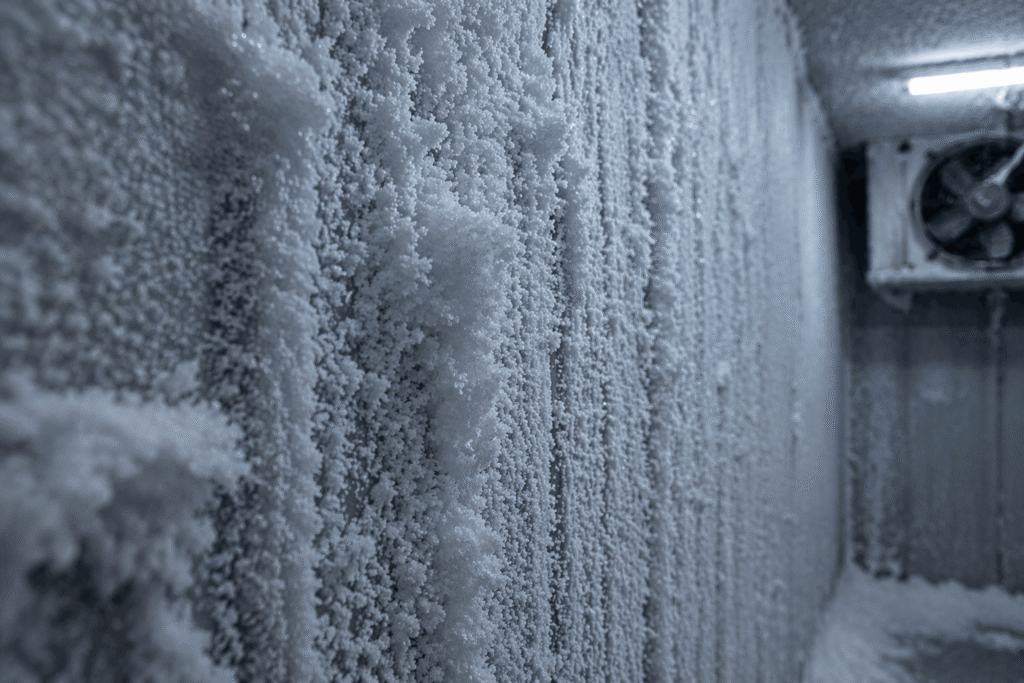
Ice build‑up around cold storage doorways is a common issue in temperature‑controlled facilities.
It often starts gradually with a patch forming near the threshold and frost collecting around the frame. Over time it can lead to safety hazards, energy loss and operational disruption.
In busy facilities where doors are opening and closing throughout the day, warm air entering chilled or freezer spaces creates condensation that quickly freezes. If the doorway isn’t properly specified for the temperature zone and traffic levels, the problem can become persistent.
Preventing ice build‑up isn’t just about reactive maintenance. It comes down to controlling airflow, reducing moisture transfer and ensuring the door system is designed for the environment it operates in.
Why Ice Forms Around Cold Storage Doorways
Ice build‑up is usually the result of uncontrolled air movement between temperature zones.
Whenever a door opens between ambient and chilled or freezer areas, warm air carrying moisture enters the colder space.
As that warm air cools, condensation forms. In sub‑zero environments, that condensation freezes almost immediately.
Over time, this repeated cycle creates frost and ice around:
- Door thresholds
- Frame edges
- Seals and gaskets
- Tracks and guide rails
Several factors make the problem worse.
Frequent Door Cycles
In high‑traffic facilities, doors may be opening dozens, or even hundreds, of times per day. The longer a door remains open, the greater the amount of warm air that enters.
If closing speeds are slow, or doors are regularly left open during loading activity, moisture transfer increases significantly.
Poor Sealing or Incorrect Door Type
Doors not designed for freezer or chilled environments often lack the insulation and tight sealing needed to control temperature transfer.
Gaps around frames, worn seals or insufficient insulation allow continuous air infiltration, even when the door is closed.
Temperature Differentials Between Zones
The greater the temperature difference between two areas, the more aggressively moisture will condense and freeze. Transitions between ambient loading bays and sub‑zero storage are particularly prone to ice formation if airflow isn’t properly managed.
The Operational Impact of Ice Build‑Up
Left unmanaged, ice around cold storage doorways can affect safety, equipment performance and operating costs.
Slip & Vehicle Hazards
Frozen thresholds create obvious slip risks for staff moving between zones. In facilities using pallet trucks or forklifts, ice can also reduce traction, increasing the risk of skidding or load instability.
What begins as light frost can quickly turn into a safety concern in busy environments.
Increased Energy Consumption
Every time warm air enters a chilled or freezer space, the refrigeration system has to work harder to restore the set temperature.
Persistent air infiltration leads to higher compressor run times, increased energy usage and a greater strain on cooling equipment.
Over time, this has a measurable impact on operating costs.
Door & Equipment Damage
Ice build‑up can interfere with door operation, particularly around seals, tracks and moving components. This can lead to:
- Poor sealing performance
- Doors sticking or misaligning
- Premature wear on motors and mechanisms
In freezer environments especially, repeated freeze‑thaw cycles can shorten the lifespan of inadequately specified doors.
Hygiene & Audit Concerns
In food production and pharmaceutical facilities, uncontrolled condensation and ice can become a compliance issue. Standing water from melting ice or excess frost accumulation may raise concerns during hygiene inspections.
Preventing Ice Build‑Up: Controlling Airflow at the Doorway
In most cases, ice build‑up is a symptom of uncontrolled airflow. Addressing the doorway itself is often far more effective than repeatedly clearing frost from the floor.
Prevention starts with reducing the amount of warm, moist air entering temperature‑controlled areas.
Reduce Open Time
The longer a door remains open, the greater the volume of warm air that transfers into chilled or freezer spaces.
In high‑traffic environments, slow‑moving or manually operated doors can significantly increase exposure time. Faster door cycles and automated closing systems help limit this exchange and stabilise internal temperatures.
Improve Thermal Separation Between Zones
Transitions between ambient, chilled and freezer areas need properly insulated door systems that create a reliable seal when closed.
Standard industrial doors are rarely sufficient for sub‑zero applications. Without adequate insulation and tight perimeter sealing, condensation will continue to form, even when the door appears shut.
Match the Door to the Temperature Zone
Not every opening within a cold storage facility requires the same type of door, but in freezer and high‑traffic environments, speed and thermal performance need to work together.
High‑traffic chilled and freezer areas benefit from rapid‑cycle doors that minimise open time and reduce air exchange. In sub‑zero environments especially, the door must also be engineered to operate reliably in freezing conditions while maintaining a tight thermal seal.
Where frequent movement meets extreme temperature differences, a high‑speed freezer‑rated door is often the most effective way to control airflow and prevent recurring ice build‑up.
High‑Speed Freezer Doors: Reducing Ice at the Source
In sub‑zero environments, preventing ice build‑up depends on two key factors: limiting air exchange and maintaining a reliable thermal seal when the door is closed.
High‑speed freezer doors are designed specifically to address both.
Rapid opening and closing cycles significantly reduce the amount of warm air entering the freezer during each use. Shorter open times mean less condensation forming inside the doorway and less frost accumulating around frames and thresholds.
At the same time, freezer‑rated construction ensures the door can operate consistently in low temperatures without seal failure, sticking or mechanical strain caused by freezing conditions.
K2 Freezer Doors for Sub‑Zero Environments
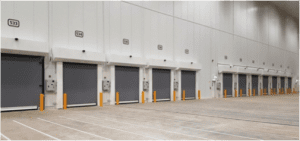
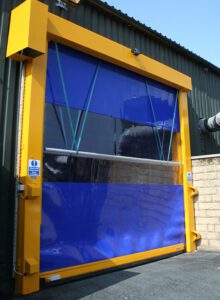
BID Group’s K2 Freezer Door is engineered for high‑traffic freezer applications where temperature control and operational efficiency are equally important.
Designed to perform in sub‑zero conditions, the K2 combines:
- High‑speed operation to minimise air transfer
- Strong thermal separation between zones
- Reliable sealing to reduce moisture ingress
- Robust construction for demanding industrial use
By reducing exposure time and maintaining a consistent barrier between temperature zones, high‑speed freezer doors play a direct role in limiting condensation and preventing ice formation at the doorway.
In facilities where forklifts and staff are constantly moving between ambient and freezer areas, this can make a measurable difference to safety, energy efficiency and maintenance demands.
Managing Traffic Between Temperature Zones
Not every cold storage opening leads directly into a freezer. Many facilities operate across multiple zones, ambient loading bays, chilled production areas and sub‑zero storage, with constant movement between them.
These transition points are often where condensation problems begin.
When doors open slowly or remain open during busy periods, large volumes of warm air move into controlled environments. Even in chilled areas above freezing, this moisture can settle and later contribute to ice formation further inside the facility.
Klimate High Speed Doors for Chilled & High‑Traffic Areas
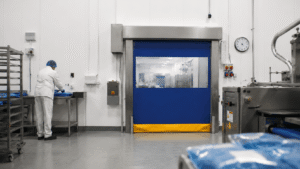
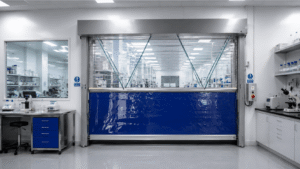
For chilled environments and high‑movement internal zones, Klimate High Speed Doors are designed to keep traffic flowing while limiting air transfer.
Fast opening and closing speeds reduce exposure time between temperature zones, helping to:
- Maintain more stable internal temperatures
- Reduce strain on cooling systems
- Limit condensation build‑up
- Improve workflow efficiency
In busy food production and distribution settings, where doors may cycle continuously throughout the day, controlling open time is critical.
Used alongside a dedicated freezer solution such as the K2, high‑speed doors in chilled and transition areas help create a controlled temperature strategy across the entire site, not just at the freezer entrance.
A Zoning Strategy for Long‑Term Ice Prevention
Preventing ice build‑up isn’t about fixing a single doorway. In most cold storage facilities, it requires a coordinated approach across multiple temperature zones.
Each transition point presents a risk of air and moisture transfer. The greater the difference in temperature the higher the traffic, the greater the risk of condensation and freezing.
A structured zoning strategy helps control this.
Ambient to Chilled
At loading bays or production entrances, high‑speed doors help reduce the volume of warm air entering controlled areas. Faster cycles and automatic closing limit exposure time and stabilise internal temperatures.
Chilled to Freezer
This is typically the most critical transition. Sub‑zero environments are highly sensitive to air infiltration, and repeated door cycles can quickly lead to frost accumulation.
Installing a high‑speed freezer door at this point helps maintain thermal separation while supporting constant operational movement.
Within High‑Traffic Internal Areas
Even within chilled zones, controlling airflow improves efficiency and reduces condensation that may later contribute to ice formation deeper in the facility.
By using high‑speed doors in traffic-heavy areas and dedicated freezer‑rated solutions where required, sites can significantly reduce moisture transfer at every stage.
Rather than treating ice as a recurring maintenance issue, this approach addresses the underlying cause, uncontrolled air movement between temperature zones.
Taking a Long-Term Approach to Ice Prevention
In cold storage environments, doorways are one of the most critical control points. If they’re not specified correctly for the temperature zone and traffic levels, ice build‑up will continue to return, no matter how often it’s cleared.
Addressing the issue properly means reviewing how each opening functions within the wider facility.
High‑traffic transition points require rapid operation to limit exposure time, while sub‑zero freezer entrances demand doors engineered specifically for low‑temperature performance.
Solutions such as the K2 Freezer Door, designed for high‑speed operation in freezer conditions, and Klimate High Speed Doors for chilled and transitional areas, allow facilities to manage airflow consistently across the site.
When the right door is installed in the right location, ice formation becomes far easier to control, improving safety, protecting equipment and supporting more stable temperature management.
If ice build‑up is a recurring issue in your facility, reviewing your door specification is often the most effective place to start.