Thermal Shock in Cold Storage Environments and How Freezer Doors Help
Thermal Shock in Cold Storage Environments and How Freezer Doors Help
Cold storage facilities operate under tightly controlled temperature conditions, often with significant differences between internal zones and external environments. In busy industrial premises, where doors are opened and closed frequently throughout the day, maintaining those temperatures can be challenging.
One issue that can arise as a result of rapid temperature changes is thermal shock, a problem that can affect building structures, door systems and overall energy performance.
Understanding how and why thermal shock occurs is key to protecting both your facility and its long-term operational efficiency.
What Is Thermal Shock?
Thermal shock occurs when a material or surface experiences a rapid and significant change in temperature.
In cold storage environments, this typically happens when warm air enters a sub‑zero area or when cold surfaces are suddenly exposed to higher ambient temperatures.
The sharp temperature difference causes materials to expand or contract quickly. Over time, repeated cycles of expansion and contraction can place stress on building components, door systems and surrounding structures.
In freezer and cold storage facilities, thermal shock most commonly affects doorways. These openings form the barrier between controlled internal temperatures and warmer external or adjacent zones, making them particularly vulnerable to rapid environmental change.
What Causes Thermal Shock in Cold Storage Facilities?
Cold storage environments are especially prone to thermal shock due to the extreme temperature differentials they operate under.
One of the primary causes is frequent door cycling between temperature zones. When a freezer door opens, warm, moisture‑laden air can enter the space. Once inside, that moisture condenses and quickly freezes on cold surfaces. When the door closes and the area stabilises, the process repeats with each cycle.
Prolonged open times, slow‑moving doors or doors not designed specifically for sub‑zero conditions can increase the volume of warm air entering the freezer, intensifying the effect.
High traffic levels also play a role. In distribution centres, food production facilities and other busy operations, forklift and personnel movement may require doors to open hundreds of times per day. Without a door system engineered to minimise air exchange and maintain reliable sealing, the cumulative impact can be significant.
In some cases, inadequate installation or poor sealing around the frame can further contribute to uncontrolled airflow, increasing the likelihood of rapid temperature fluctuations at the doorway.
The Risks and Consequences of Thermal Shock
If left unmanaged, thermal shock can lead to a range of operational and structural issues within a cold storage facility.
Repeated expansion and contraction may place strain on door frames, seals and surrounding building materials. Over time, this can result in premature wear, reduced sealing performance and increased maintenance requirements.
Condensation and ice build‑up are also common side effects. As warm air enters a freezer environment and moisture freezes, ice can accumulate around thresholds, guide rails and adjacent surfaces.
This not only affects door operation but can also create slip hazards and safety concerns for staff and vehicle operators.
Thermal shock can also impact energy performance. Fluctuating temperatures force refrigeration systems to work harder to maintain set conditions, increasing energy consumption and operational costs.
How Freezer Doors Reduce Thermal Shock
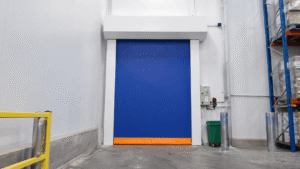 Because doorways are the primary point of temperature exchange in cold storage facilities, they also represent the most effective place to control and reduce thermal shock.
A properly specified freezer door helps limit rapid air movement, maintain stable conditions and reduce the stress placed on both the building structure and refrigeration systems.
Minimising Air Exchange with High‑Speed Operation
One of the most effective ways to reduce thermal shock is by minimising the amount of warm air that enters a freezer environment during each door cycle.
High‑speed operation significantly reduces open time, limiting exposure between temperature zones. The faster the door opens and closes, the less opportunity there is for warm, moisture‑laden air to enter and condense on cold surfaces.
In high‑traffic facilities, where doors may operate hundreds of times per day, these small reductions in exposure quickly add up. Over time, this can dramatically reduce ice formation and temperature instability.
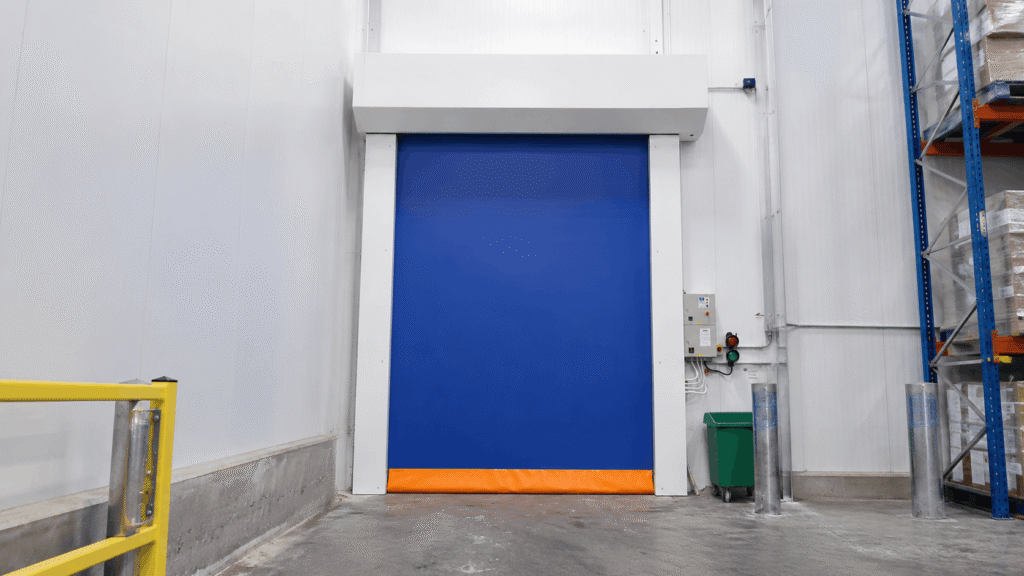
The BID Group K2 High Speed Freezer Door is specifically designed with this in mind. Its rapid cycle speeds help maintain environmental separation in busy freezer applications, supporting temperature stability and reducing the conditions that lead to thermal shock.
Maintaining Reliable Thermal Separation
A freezer door must provide tight perimeter sealing to reduce uncontrolled airflow around the edges of the opening. Poor sealing can allow constant air leakage, even when the door is closed, contributing to ongoing condensation and frost build‑up.
The curtain design and guide system must also be robust enough to maintain alignment and integrity under frequent use. In freezer environments, components are exposed to extreme conditions that can affect flexibility and performance if not properly engineered.
The K2 High Speed Freezer Door is designed for reliable operation in sub‑zero conditions, combining rapid movement with durable construction and dependable sealing to maintain consistent thermal separation.
Built for Freezer Environments
Freezer applications place greater demands on door systems than most other industrial environments.
Low temperatures can affect materials, while frequent traffic increases the risk of impact. A freezer door must therefore be both heavy‑duty and impact resistant to withstand daily operational pressures.
The K2 is purpose‑built for freezer conditions, with robust construction designed to cope with high cycle rates and potential contact from vehicles or handling equipment.
Its crash‑resistant features help reduce downtime and minimise disruption should accidental impact occur.
By combining speed, durability and sub‑zero reliability, freezer‑rated high‑speed doors play a central role in reducing the causes and consequences of thermal shock.
The Role of Professional Industrial Door Installation
While the door itself is critical, its effectiveness depends heavily on correct specification and installation.
Thermal shock prevention is not achieved through product selection alone, it requires a considered approach to how each opening functions within the wider facility.
Correct Specification for Temperature Zones
Every cold storage environment is different. Factors such as temperature differential, traffic volume and opening dimensions all influence the most appropriate door solution.
Assessing the difference between adjacent zones, for example, ambient to freezer, helps determine the performance requirements. High‑traffic routes may demand faster cycle speeds, while larger openings may require reinforced structures.
Working with an experienced industrial door specialist such as BID Group ensures that the door is matched to its operational environment rather than treated as a standard, one‑size‑fits‑all solution.
Installation Quality and Thermal Performance
Even the most advanced freezer door can underperform if installed incorrectly.
Proper frame fitting, secure fixing and precise alignment are essential to maintain seal integrity.
Gaps around the frame or poorly adjusted components can allow unwanted air leakage, undermining thermal performance.
Professional installation helps ensure the door operates as intended, maintaining reliable separation between temperature zones and reducing the risk of recurring thermal shock.
Ongoing Maintenance & Support
Cold storage environments are demanding, and preventative maintenance is key to long‑term reliability.
Regular servicing helps identify wear on seals, components or guide systems before they compromise performance. In freezer applications particularly, small issues can quickly escalate if left unresolved.
With nationwide coverage, UK‑wide engineers and 24/7 call‑out support, BID Group provides ongoing service and maintenance to ensure freezer doors continue operating efficiently in high‑demand environments.
Creating a Zoning Strategy to Prevent Thermal Shock
In larger facilities, reducing thermal shock can require a coordinated approach to managing airflow between multiple temperature zones. A clear zoning strategy can significantly reduce temperature instability and moisture transfer.
Ambient to Chilled Transitions
Where ambient areas connect to chilled storage, high‑speed operation helps reduce temperature fluctuations and humidity transfer.
Fast‑acting doors limit exposure time and support more stable environmental control.
Chilled to Freezer Transitions
This is typically the most critical transition point. The greater the temperature difference, the higher the risk of condensation and ice formation.
Installing a purpose‑built solution such as the K2 High Speed Freezer Door at freezer access points helps maintain reliable separation while accommodating constant operational movement.
Managing High‑Traffic Internal Routes
In facilities with heavy internal vehicle movement, controlling airflow along primary traffic routes further reduces the risk of moisture migration deeper into freezer zones.
Complementary high‑speed door solutions across internal openings can support overall environmental stability, creating multiple layers of temperature control throughout the site.
By considering each transition point strategically, and installing appropriately specified industrial door solutions, facilities can significantly reduce the operational impact of thermal shock.
Signs Your Facility May Be Experiencing Thermal Shock
Thermal shock is not always immediately obvious, but there are clear warning signs that indicate temperature instability may be affecting your cold storage environment.
Recognising these early can help prevent more serious structural or operational issues.
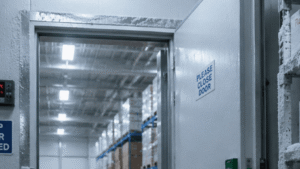
Persistent ice build‑up near doors
If ice regularly forms around thresholds, guide rails or adjacent wall surfaces, it may indicate repeated warm air ingress and rapid freezing.
Condensation forming rapidly after openings
Visible moisture or misting shortly after a door cycle suggests significant temperature exchange between zones.
Freezer doors sticking or freezing
If seals harden, components stiffen or doors become difficult to operate, temperature stress and moisture build‑up may be contributing factors.
Rising energy bills
Refrigeration systems working harder to maintain set temperatures can increase energy consumption over time.
Increased door maintenance
Frequent seal replacement, alignment issues or component wear may point to ongoing thermal stress at the doorway.
If several of these signs are present, it may be time to review how freezer access points are specified and managed.
Choosing the Right Freezer Door Solution
When assessing industrial door options, consider the following:
- Speed of operation
- Sub‑zero capability
- Impact resistance
- Sealing performance
- Installation expertise
The K2 High Speed Freezer Door by BID Group is purpose-built for demanding freezer applications, combining rapid operation, robust construction and dependable sealing to support long‑term thermal control.
Preventing Thermal Shock FAQs
What is the difference between thermal shock and thermal bridging?
Thermal shock refers to rapid temperature changes that cause materials to expand and contract quickly, potentially leading to stress and damage.
Thermal bridging, on the other hand, occurs when heat transfers through a more conductive material (such as steel framing), bypassing insulation. While different issues, both can affect temperature stability and energy efficiency in cold storage environments.
Does air curtain technology help reduce thermal shock?
Air curtains can help reduce warm air ingress at freezer openings, particularly in high‑traffic areas. However, they are typically used as a complementary solution rather than a replacement for a properly specified freezer door.
For best results, airflow management should work alongside a high‑speed, well‑sealed freezer door system.
How does humidity affect thermal shock in cold storage?
Humidity plays a significant role. Warm air entering a freezer environment often carries moisture, which rapidly condenses and freezes on contact with cold surfaces.
Higher ambient humidity levels can therefore increase ice build‑up and condensation issues, making rapid door operation and effective sealing even more important.
Are strip curtains enough to prevent thermal shock?
PVC strip curtains can reduce some airflow, but they do not provide the same level of environmental control as a purpose‑built freezer door.
They are often used as secondary protection but may not sufficiently minimise air exchange in high‑traffic or large‑opening applications.
For sub‑zero environments, a dedicated freezer‑rated door is typically the more reliable long‑term solution.
How often should freezer doors be serviced?
In high‑traffic cold storage environments, preventative maintenance is typically recommended at least annually, and often more frequently depending on usage levels.
Regular servicing helps ensure seals, guide systems and motor components remain in good condition, supporting consistent thermal separation and reducing the risk of operational downtime.
Can upgrading freezer doors improve energy efficiency quickly?
Yes. Because doorways are a primary source of temperature exchange, improving door speed, sealing and reliability can have an immediate impact on temperature stability and refrigeration workload.
While energy savings vary by facility, reducing uncontrolled air ingress can contribute to measurable improvements in overall efficiency.