Air Curtains vs High Speed Doors: Which Does Your Opening Need?

Air Curtains vs High Speed Doors: Which Does Your Opening Need?

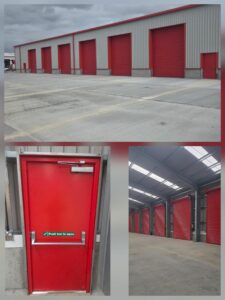
interior shot of a warehouse with a row of doors

An air curtain helps reduce air movement across an opening that remains physically open, while a high speed door physically closes the opening between movements. Choosing between them comes down to what the opening actually needs to achieve.

When deciding what is right for your facility, factors such as traffic levels, security, access control, environmental separation and whether the opening needs to physically close should all be considered.

Air Curtains vs High Speed Doors: What’s the Difference?

Air Curtains

An air curtain creates a controlled stream of air across an open doorway, helping to reduce 

the movement of air between adjoining environments without creating a physical obstruction.

The key difference is that the opening remains physically open, allowing people, vehicles or goods to pass through freely.

High Speed Doors

A high speed door provides a physical barrier that opens and closes rapidly around traffic, helping to separate one area from another while still supporting frequent movement through the opening.

Unlike an air curtain, the opening can be physically closed and separated when access is not required.

Requirement Air Curtain High Speed Door
Physical barrier No Yes
Opening when not in use Remains open Can remain closed
Security / access control No physical security Can provide physical separation and controlled access
Constant unobstructed traffic Well suited Opens and closes around traffic
Airflow management Primary function Achieved through physical separation
Combined use Can complement a door Can operate alongside an air curtain

This fundamental difference should be one of the main factors driving the specification: does the opening primarily need airflow control, a physical barrier, or both?

Which Does Your Opening Actually Need?

Do You Need a Physical Barrier?

If the opening needs to close securely, a high speed door is likely to be the more appropriate solution.

This may be necessary where the opening forms part of a secure perimeter, access needs to be restricted, different operational areas must be separated, or the opening needs to be protected when it is not in use. 

External openings may also require a physical barrier for security and protection from the surrounding environment.

An air curtain can help manage airflow, but it does not physically close the opening. Where security, access control or physical separation is required, it cannot perform the same role as a door.

Is the Priority Controlling Air Movement Through an Open Doorway?

In some facilities, the priority is keeping an opening clear while reducing the movement of air between adjoining areas.

This may apply where people, vehicles or goods pass through frequently and a permanently unobstructed opening is important to day-to-day operations. In these situations, an air curtain may help limit air transfer without creating a physical barrier.

The key consideration is whether the opening genuinely needs to close. If it does not, and airflow control is the main requirement, an air curtain may be the simpler solution.

How Much Traffic Passes Through the Opening?

A personnel doorway used occasionally has very different requirements from an opening serving forklifts, HGVs or other vehicles throughout the day.

Where frequent traffic causes conventional doors to remain open for long periods, an air curtain may help manage airflow while keeping the route unobstructed. 

Alternatively, a high speed door can open and close quickly around each movement, providing physical separation without unnecessarily slowing down traffic.

The right choice depends on how often the opening is used, what passes through it and whether maintaining a physical barrier between movements is important.

Is the Opening Internal or External?

The location of the opening also has a large impact on the solution needed.

External openings are typically exposed to additional factors such as wind, weather and security requirements, making physical closure more important in many applications.

Internal openings may instead be focused on separating operational areas or controlling conditions between adjoining spaces.

For a more detailed look at these considerations, read our guide to Internal vs External High Speed Doors.

Can Air Curtains and High Speed Doors Be Used Together?

Yes. In some applications, air curtains and high speed doors can work alongside each other rather than acting as alternatives.

The high speed door provides the physical barrier, while the air curtain can help manage airflow when the door is open. This can be useful where an opening needs both frequent access and greater environmental control.

However, a combined system is not necessary for every opening. Whether both are required will depend on factors such as traffic levels, temperature differences, exposure and how the opening is used.

For cold-storage environments specifically, read our guide to Thermal Shock in Cold Storage Environments and How Freezer Doors Help.

Questions to Ask Before Making Your Choice

Before deciding between an air curtain and a high speed door, consider:

  • Does the opening need to physically close?
  • Is security or controlled access required?
  • Is the opening internal or external?
  • How frequently does traffic pass through it?
  • How long does the opening typically remain open?
  • What environmental conditions exist on either side?
  • What size is the opening?
  • Is the main objective airflow management, physical separation, or both?

There is no single solution that will suit every opening. The specification should be based on how the opening is actually used and what it needs to achieve.

Choosing the Right Solution for Your Opening

Not sure which solution is best for your premises? Our team of experts at BID Group can assess your operational requirements and recommend the most suitable industrial door solution for your facility.

Talk to our team to discuss your requirements or arrange a free site survey.

Air Curtains vs High Speed Doors FAQs

Can an air curtain replace a high speed door?

Not where a physical barrier is required. An air curtain can help reduce air movement through an open doorway, but it does not provide security, restricted access or physical separation. If the opening needs to close, a high speed door is likely to be the more suitable solution.

Do I need an air curtain if I already have a high speed door?

Not necessarily. A correctly specified high speed door may provide everything the opening requires on its own. An air curtain may be considered where additional airflow management is beneficial while the door is open, but this will depend on the application and operating environment.

Can air curtains and high speed doors be used together?

Yes. A high speed door can provide physical separation when closed, while an air curtain helps manage airflow when the opening is in use. Whether both are needed should be assessed based on traffic levels, environmental conditions and the purpose of the opening.

Are air curtains suitable for external industrial openings?

They can be, but external conditions need to be considered carefully. Wind, weather exposure, the size of the opening and traffic patterns can all affect how effectively an air curtain performs. 

Where security or physical protection is also required, an air curtain would not replace the need for an appropriate industrial door.

What should I consider when specifying a high-traffic industrial opening?

Consider what moves through the opening, how frequently it is used, how long it remains open, whether security or controlled access is required, and the conditions on either side. 

These factors will help determine whether the opening needs airflow management, rapid physical separation or a combination of both.

You might also like