What Happens During a High Speed Door Site Survey?

What Happens During a High Speed Door Site Survey?

Before BID Group recommends and quotes for a high speed door, a site survey helps establish what the opening actually needs.

The survey looks beyond measurements alone. The surveyor will also consider how the opening is used, the environment around it, the conditions the door will face and what the customer needs the opening to achieve.

In this guide, we’ll look at the main checks BID Group carries out during a high speed door site survey.

Why Does BID Carry Out a Site Survey?

Two openings of a similar size can still require very different high speed door solutions.

A warehouse vehicle entrance, freezer opening and hygienic production area may all place different demands on the door.

The site survey gives BID Group the information needed to recommend a suitable solution and prepare a quotation based on the actual opening and operating conditions.

1. Measuring the Opening and Available Space

The surveyor will take accurate measurements of the opening, including its width and height, as well as the available headroom and space to either side.

They will also check the floor level and condition, nearby services or obstructions, and the space available for the door guides, motor and other components.

This establishes what can physically be accommodated within the opening before a door is recommended.

2. What Temperature Conditions Does the Door Need to Handle?

Temperature is an important consideration, particularly where the door separates areas with very different conditions.

The surveyor will look at the temperatures around the opening and whether the door will be used in areas such as:

  • Freezer storage
  • Chilled environments
  • Temperature-controlled production
  • Standard ambient industrial spaces

This can help determine whether a standard high speed door is suitable or whether a specialist solution such as the Klimate K2 Freezer Door is required.

3. What Type of Traffic Uses the Opening?

BID Group will also establish exactly what needs to pass through the opening.

This could include:

  • Pedestrians
  • Forklifts
  • HGVs or other vehicles
  • A mixture of pedestrian and vehicle traffic

How traffic approaches and moves through the opening is also important. This helps the surveyor understand how the door will need to operate within the existing traffic flow and what activation and safety arrangements may be appropriate.

4. How Frequently Is the Opening Used?

The surveyor will also consider how regularly the opening is used throughout the day.

An occasionally used doorway will place different operational demands on a door from an opening serving regular forklift movements or forming part of a busy production or logistics process.

Understanding the pattern of use helps BID Group recommend a door suited to the demands of the opening.

5. Is the Opening Exposed to Wind?

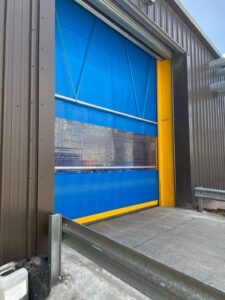
Wind exposure is another factor BID Group considers, particularly for external openings.

The surveyor may look at the position of the opening, how exposed that side of the building is, the size of the doorway and whether the surrounding buildings or site layout could affect wind conditions.

An opening within a sheltered yard can face very different conditions from a large doorway on an exposed part of a building, so this needs to be reflected in the door specification.

6. What Level of Security Does the Opening Need?

Security requirements can also influence the solution BID Group recommends.

The surveyor will consider how the opening needs to be secured when it is not in regular use. Depending on the site, this could mean recommending:

  • A high speed door on its own
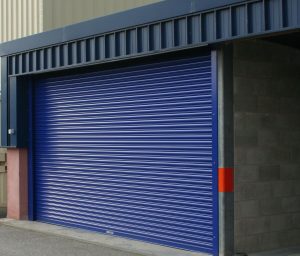
  • A roller shutter where security is the main requirement
  • A high speed door and roller shutter together as a dual-door system

This means the survey isn’t simply about deciding which high speed door will fit. The most appropriate arrangement will depend on what the opening needs to achieve both during and outside operating hours.

For more information, see our guide to Can High Speed Doors and Roller Shutters Be Used Together?

7. What Is the Operating Environment Like?

The wider working environment can also affect the type and construction of door recommended.

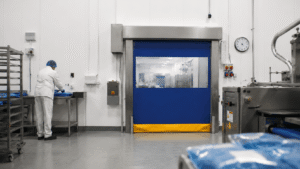
For example, a food-production or hygiene-critical area may have very different requirements from a general warehouse or manufacturing facility. A stainless steel high speed door may be more appropriate where hygiene and easy cleaning are important, while other environments may require a different material or door configuration.

The aim is to make sure the door is suited to the conditions it will actually operate in, rather than specifying the same solution for every opening.

8. What Existing Doors, Equipment and Services Are Around the Opening?

The surveyor will also check what is already installed around the opening and what the new door will need to work around.

This may include:

  • Existing roller shutters or industrial doors
  • Steelwork and fixing positions
  • Electrical supplies
  • Pipework or ducting
  • Machinery close to the opening
  • Existing controls or access equipment

These checks are particularly important when a high speed door is replacing an existing door or being retrofitted into an established industrial opening.

For more detail, see Retrofitting High Speed Doors into Existing Industrial Openings: What Needs to Be Considered?

9. How Should the Door Be Activated?

The survey also needs to establish how people, vehicles or equipment will trigger the door during normal operation.

Depending on the site, activation could involve:

  • Push buttons
  • Pull cords
  • Radar or motion detection
  • Vehicle detection
  • Remote controls
  • Access-control systems

The surveyor will also need to know if the high speed door is expected to communicate with other equipment or doors. This might include integration with a conveyor system or operation as part of an interlocked arrangement.

What Happens After the Site Survey?

Once the survey is complete, BID Group can use the information gathered to determine the most suitable solution for the opening and prepare the basis of the quotation.

This includes considering:

  • The type of high speed door required
  • The correct dimensions and configuration
  • Any specialist environmental requirements
  • Controls and activation methods
  • Whether another door, such as a roller shutter, is also required
  • Any preparatory work that may need to be considered

The recommendation is therefore based on the opening and how it is actually used, rather than dimensions alone.

Arrange a High Speed Door Site Survey

A site survey allows BID Group to assess the opening in its real operating environment before recommending a high speed door solution.

Our team can review the opening, traffic, temperature, wind exposure, security and control requirements before recommending a suitable solution and preparing a quotation.

Talk to BID Group about your requirements or arrange a site survey.

High Speed Door Site Survey FAQs

Do I need a site survey before getting a high speed door quote?

BID Group can discuss your initial requirements, but a site survey provides the detailed information needed to assess the opening, operating conditions and appropriate door specification before a final recommendation is made.

What does BID Group check during a high speed door survey?

The survey considers factors including the opening dimensions, temperature conditions, type and frequency of traffic, wind exposure, security requirements, operating environment, existing equipment and how the door needs to be activated.

Does BID check whether I need a standard or freezer high speed door?

Yes. Temperature is one of the factors BID Group assesses during the survey. This helps determine whether a standard high speed door is suitable or whether the application requires a specialist freezer high speed door.

Why does traffic type matter during a high speed door survey?

The surveyor needs to understand whether the opening is used by pedestrians, forklifts, HGVs or a mixture of traffic. This helps determine how the door will need to operate and what activation and safety arrangements should be considered.

Does wind exposure affect which high speed door I need?

It can. The position, size and exposure of an external opening can affect the conditions the door needs to withstand, so wind is considered as part of the survey.

Will BID assess whether I need a roller shutter as well as a high speed door?

Yes. Security is one of the considerations during the survey. Depending on the requirements of the opening, BID Group may recommend a high speed door, a roller shutter or a dual-door arrangement using both.

Can BID survey an opening with an existing industrial door?

Yes. Existing doors, equipment and services around the opening can be assessed as part of the survey to establish what can remain in place and whether any alterations may be required for the new installation.

What information should I have ready for a high speed door site survey?

It can be helpful to explain how the opening is currently used, what passes through it and any known requirements around temperature, security or controls.

The surveyor can then assess the opening and surrounding conditions in more detail during the visit.

You might also like