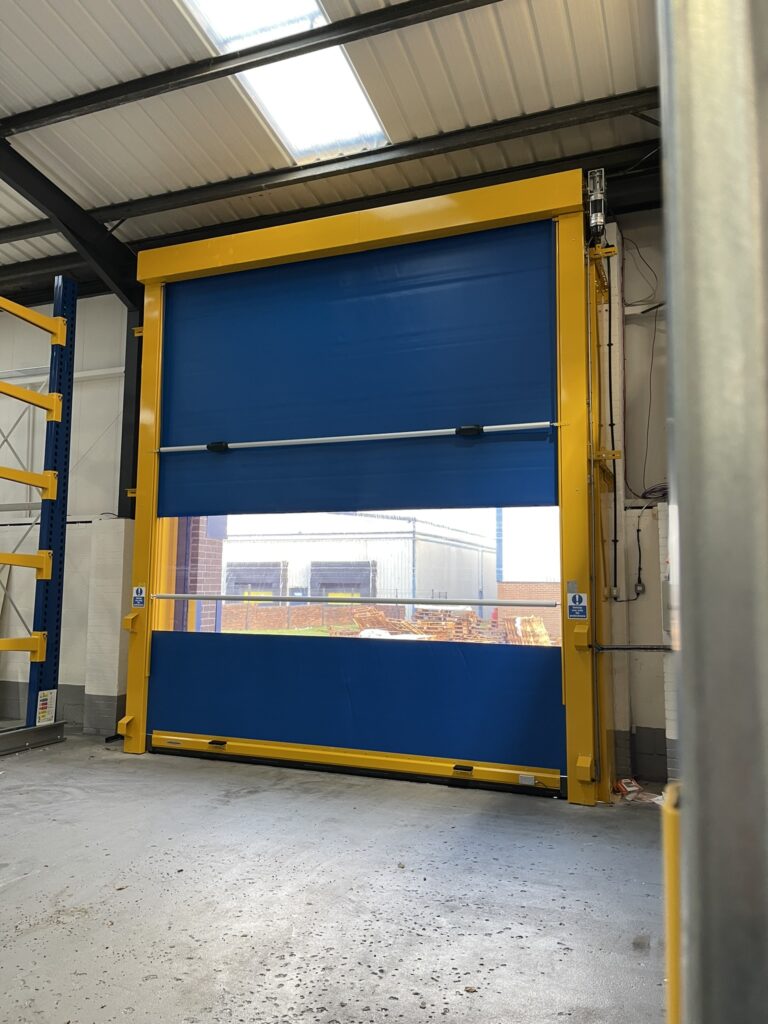
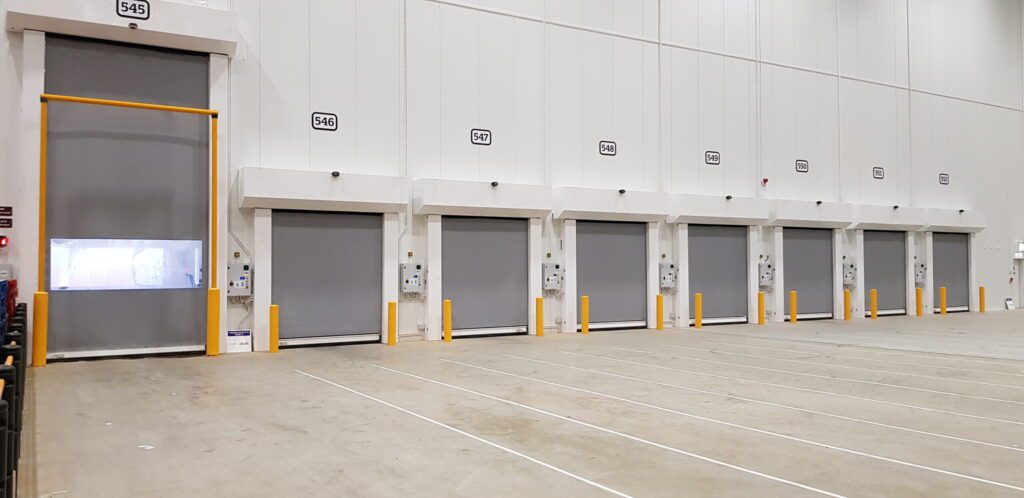
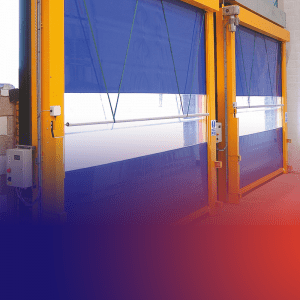
A high speed door safety edge is a contact-sensitive safety device fitted to the moving edge of the door. If the door meets an obstruction while closing, the safety edge detects the contact and signals the controls to stop or reverse the movement.
In this guide, we’ll explain how safety edges work on high speed doors, the signs that something may be wrong and how they are checked and tested.
What Is a High Speed Door Safety Edge?
The safety edge is typically fitted along the bottom or leading edge of the moving door.
If it comes into contact with a person, vehicle, pallet or another obstruction, the edge compresses and sends a signal to the door control system.
Unlike sensors that can detect something before it reaches the doorway, a safety edge is a contact safety device. It responds when the moving edge itself meets an obstruction.
How Does a High Speed Door Safety Edge Work?
The process is relatively simple:
- The high speed door begins to close.
- The safety edge comes into contact with an obstruction.
- The edge compresses and activates.
- A signal is sent to the door controller.
- The controller responds by stopping or reversing the door, depending on how the system has been configured.
This allows the door to react when something is caught in its closing path rather than continuing to travel against the obstruction.
Does a Safety Edge Always Reverse the Door?
Not necessarily. The exact response depends on the door and control setup.
In many systems, activating the safety edge will stop or reverse the closing movement. In some cases, a detected fault within the safety system may instead prevent normal operation until the issue has been checked.
How Is a Safety Edge Different From Other Door Sensors?
A safety edge reacts when the moving edge of the door makes physical contact with an obstruction.
Other safety devices, such as photocells or presence sensors, can detect a person, vehicle or object before contact occurs. The safety edge therefore forms one part of the wider safety arrangement around the door rather than replacing other detection devices.
What Are the Signs of a Faulty High Speed Door Safety Edge?
Some safety edge problems are easy to spot, while others may first appear as a change in how the door operates.
Signs that something may be wrong include:
- Splitting, crushing or other visible damage to the safety edge
- The door reversing when there is no obvious obstruction
- The door failing to complete its closing cycle
- Intermittent safety faults
- Loose or damaged cables or connections
- Problems with wireless transmitters or receivers, where fitted
- An inconsistent response when the safety edge is activated
A physical inspection may reveal an obvious problem, but intermittent faults can be harder to identify and should be properly investigated.
Is the Safety Edge Always the Cause of the Fault?
No. A door that reverses unexpectedly or reports a safety-edge fault does not necessarily have a problem with the edge itself.
The fault could also involve the associated cabling, connections, wireless transmitter or receiver, or the input to the door control system.
This is why the cause should be identified before individual parts are replaced, particularly where there is no visible damage to the safety edge.
How Is a High Speed Door Safety Edge Tested?
Testing should confirm that the safety edge is in good condition and that the door responds correctly when the device is activated.
Checks may include:
- Inspecting the edge for visible damage or deterioration
- Checking that it remains securely fitted
- Confirming that activation produces the expected response from the door
- Inspecting associated cables or wireless components where applicable
- Checking that the safety function operates consistently
Because the safety edge is part of a powered door’s safety system, faults or inconsistent operation should be investigated by a competent engineer rather than relying on trial-and-error replacement.
BID Group provides industrial door servicing and repairs, including inspection and diagnosis of faults affecting powered door systems.
What Should You Do If the Safety Edge Is Damaged or Not Working?
If the safety edge is visibly damaged, operates inconsistently or the door does not respond as expected when it is activated, the door should be professionally inspected.
The problem may be with the safety edge itself or another part of the safety or control system, so identifying the actual cause is important before any components are repaired or replaced.
Contact BID Group if your high speed door is showing signs of a safety-edge fault.
Is a Safety Edge the Only Safety Device on a High Speed Door?
No. A safety edge is one part of the wider safety system around a powered door.
The complete installation may use other safety devices and needs to be considered in relation to the way the door operates and the environment around it.
For a wider look at powered-door safety and compliance, read High Speed Door Safety Standards.
Need a High Speed Door Safety Edge Checked?
If your high speed door is reversing unexpectedly, failing to close or showing signs of safety-edge damage, BID Group can inspect the door and identify whether the fault is with the safety edge or another part of the system.
Book a high speed door inspection or repair.
High Speed Door Safety Edge FAQs
What does a high speed door safety edge do?
A safety edge detects contact with an obstruction while the door is closing and sends a signal to the controls so the door can stop or reverse.
Where is the safety edge fitted on a high speed door?
It is typically fitted along the bottom or leading edge of the moving door, where it can respond if the door makes contact with an obstruction.
Does a safety edge stop or reverse the door?
It can do either, depending on how the door and its controls have been configured. In many systems, activating the safety edge causes the closing movement to stop or reverse.
Why does my high speed door keep reversing?
Unexpected reversing can be caused by a problem with the safety edge, but it may also involve cabling, connections, wireless components or the door control system. The cause should be properly diagnosed before parts are replaced.
How do you test a high speed door safety edge?
Testing involves checking the condition of the edge and confirming that activating it produces the correct response from the door. Associated cables or wireless components may also need to be inspected.
Can a damaged safety edge be repaired?
It depends on the fault. Some problems may involve connections or associated components, while physical damage to the sensing edge itself may require replacement. An engineer can determine the appropriate repair.
Is a safety edge the same as a photocell?
No. A safety edge is a contact device that activates when the moving door meets an obstruction. A photocell can detect an obstruction before physical contact occurs.
What should I do if the safety edge stops working?
If the safety edge is not working correctly, arrange for the door to be professionally inspected before returning it to normal automatic operation. Because the safety edge forms part of the door’s safety system, unexplained or inconsistent operation should not be ignored.